Showing posts with label Ellis Hospital. Show all posts

Friday, May 6, 2022

The Belanger School of Nursing

This post was written by library volunteer Gail Denisoff.

As Nurses Week approaches, we have the opportunity to acknowledge the nurses in our lives and thank those who work tirelessly each day. If we didn't already know how hard nurses work, these past two years have made it crystal clear. Our nurses have put their own well-being at risk as they took their place on the front line of the Covid19 pandemic - caring for the sick, acting as a lifeline between patients and their families, and all too often, offering the hand a patient holds as they take their last breath.

Schenectady has a long history of dedicated nurses working in the many hospital and medical facilities in the city. Many of these nurses were trained right here in the city at the Belanger School of Nursing, formally the Ellis Hospital School of Nursing.
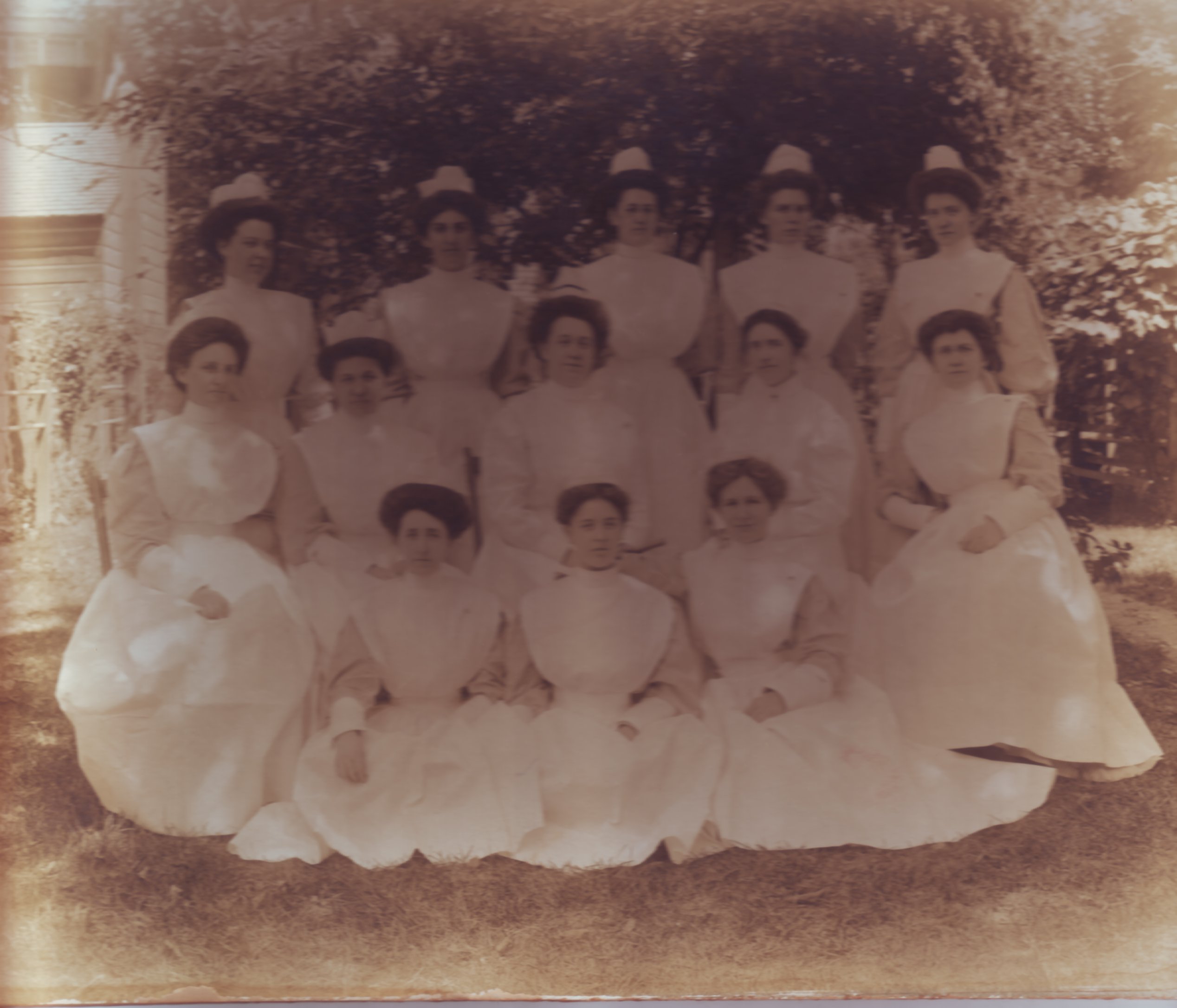
Nurses at Jay Street Hospital, circa 1898. Grems-Doolittle Library Photograph Collection.
 

In 1903, Ella Underhill, a supervising nurse at the Jay Street Hospital, began teaching five young women the basics of nursing. The new Ellis Hospital building on Rosa Road was completed by 1906, and included the Whitmore Home for Nurses. Gifted by J.W. Smitley, president of the Hospital Association, the Whitmore Home was a separate building in a similar style to the hospital. It housed nursing students along with some staff nurses. The school was incorporated in 1906 as the Schenectady Hospital Association’s Training School for Nurses and graduated its first two students, Lenita Mallery and Edith Jeannin Stanton.

The Schenectady Hospital Association’s Training School for Nurses was one of the first nursing schools in the state to receive a permanent charter in 1917. At first, the three-year program consisted mainly of learning on the job and providing needed nursing care to patients. The head nurses in various departments provided instruction to students.  Eventually a curriculum evolved and classes were held one day a week. By the early 1920s, a nurse was hired to serve as the dedicated faculty of the school teaching all the pre-clinical courses, planning student assignments, and supervising student work in the hospital.  By the 1930s, the curriculum had become a defined course of study and more faculty were hired, shifting the focus of the school from student service in the hospital to student education.  Classes increased in size and Whitmore Home became solely a dormitory for students with classrooms in the basement. Later, an annex was added to the rear of the building, increasing the number of offices, classrooms, and dormitory space. 

Student nurses in class, circa 1920. Grems-Doolittle Library Photo Collection.
  

In the 1950s, students took courses at Union College for anatomy, chemistry, and psychology. In 1958, the nursing school's charter was relinquished when the governance was transferred to the Ellis Hospital Board of Trustees. At that time the name was officially changed to The Ellis Hospital School of Nursing, although it had been called that colloquially for years.

In 1974, the Whitmore Home was torn down and students moved to rooms on the fourth floor of the YMCA on State Street along with their residence director Mrs. Mildred Hotaling. Classes were taught at Sunnyview Hospital. By 1976, students were no longer housed at the Y and began commuting from home or living together in apartments. Classes were now held in the basement of Oneida Middle School. By 1992, the school moved to the former Big N Plaza on the corner of Nott Street and Maxon Road, followed by a move to the Belanger Campus on Erie Boulevard in 2004.

The closure of the student nurses' residence put an end to some fun times that students enjoyed.  Nancy Wasmund of the class of 1969 remembers living at Whitmore Home with Nellie Leba as house mother. Students fraternized with Union College students who were just down the street, and some met future husbands. The annual Junior-Senior Variety show directed and choreographed by Dr. Clowe and Dr. Sullivan was a highlight of the year and an enjoyable experience for all involved. At that time there were no male or married students allowed. All classes were held at Ellis except for a psychiatric rotation at Marcy State Hospital where they worked with students from other nursing schools.     

Ann Marie Czaikowski, class of 1974, was a member of the last class to live in Whitmore Home for her first and second year before it closed. She remembers living with two to four girls in a room and developing a close camaraderie with her classmates because of living and learning together.  

Postcard featuring the Whitmore Home. Image from the Laura Brown Slide Collection, Grems-Doolittle Library.

Dr. Lisa Bagdan, RN PhD, class of 1986 and currently an instructor at the Belanger School of Nursing, took her classes at Oneida Middle School. She remembers having an “amazing clinical experience. It’s something the nursing school excelled in and still does.”


In 1986, the curriculum was shortened from the 3-year program to 21 months. A partnership with Schenectady County Community College enabled students to graduate with an Associate in Science degree in Nursing beginning in 1994.

In 2013 the school moved to its permanent location on McClellan Street on the former St. Clare’s campus and the name was changed to The Belanger School of Nursing thanks to a generous bequest to the school by the Belanger Family.

Over the years, the demographic of the school has changed: students are older, male students are common, many students are married with children, and students come from many different cultures and countries. One thing has stayed the same, however; the reputation of the Belanger School of Nursing remains strong. The school has a long history of excellence and its graduates have scored consistently high on statewide board licensing exams.

In 2019, the New York State Education Department approved a dual degree program in collaboration with Siena College. The first class began in the fall of 2017 and graduated with a BS in Nursing in 2021. Currently half of the nursing school enrollment are part of the Siena collaboration and the other half are in the traditional Associates of Science in Nursing program. 

Dr. Michele Hewitt, BS DNP, current Director of the nursing school, sees a bright future ahead. “Our future will always be to serve our community and to serve Ellis Medicine. Our goal is to increase enrollment and for the student body to reflect the diversity of the community in gender, race, socio-economic status, marital status, first generation students, and age.” The success of the nursing school is evident. Every year 100% of Belanger graduates are offered jobs. Dr. Hewitt adds, “Ellis Hospital offers all our graduates a job and aspires to hire at least 75% of the Belanger graduates. We hope they’ll stay.”

Front page of the Elliscope newsletter, highlighting the nursing graduates of 1969. Courtesy of Nancy Wasmund.

References:

Hart, Larry, The Hospital on the Hill, Chapter 25, The Nursing School, pp.158-164.

History of The Belanger School of Nursing, School of Nursing, Ellis Medicine website.

Nelson, Paul, “Belanger School of Nursing Opens”, Times Union, Aug. 20, 2013.

Wilkins, Jeff, “Years of Caring: Ellis School of Nursing to mark century of growth and progress”, Daily Gazette, May 3, 2003.

Thursday, November 10, 2016

Ellis Hospital during World War II

This post was written by Grems-Doolittle Library Volunteer Gail Denisoff.

Aerial view of Ellis Hospital around 1944.
Courtesy of the Grems-Doolittle Library Photograph Collection.
In the early months of 1941, before the United States declared war on Japan, Ellis Hospital was already preparing for the possibility of war.  In The Hospital Courier, a newsletter Published by Ellis Hospital, more and more articles were being written about the role of the hospital in national defense.

The June 1941 issue described the problems hospitals were facing because of the National Defense Program.  Nurses and doctors were being called from hospital staffs to serve in Army and Navy camps and to fill positions in expanded industrial plants.  Defense industries were offering higher wages forcing hospitals to increase salaries to retain personnel.  Suppliers were increasing prices of medical supplies because of the demand by countries at war while delaying delivery of goods.  Ellis, like other hospitals, was feeling the pinch, especially since they weren’t fully recovered from the depression and needed community support.
Ellis Cadet Nurse Corps in 1944. From the Ellis Hospital Collection
at the Grems-Doolittle Library. 
By 1942 the problems intensified.  There was a shortage of nurses for both civilian and military hospitals. Nursing schools were increasing enrollment of students while giving more responsibility to nurses’ aides and other non-professional workers. Ellis began training their first group of 25 women for the Red Cross Volunteer Nurses’ Aide Corps which was to be ready for active service as of March 1, 1942.  By June, Ellis was training its third class although they were still short of the Schenectady quota for volunteer nurses’ aides.

The 38 students entering the Ellis Hospital School of Nursing in September 1942 was the largest in it's history.  These young women had “chosen a field of study where they can immediately meet the war time needs of the country."  At the same time, there were concerns.  Because of the increasing demands for doctors, nurses and hospital facilities there were suggestions to curtail hospitalization of maternity patients and eliminate courses in obstetrical and pediatric nursing from nursing school curriculum to prepare students more quickly for service with the Army and Navy.  Hospitals didn’t want to sacrifice gains made in lowering maternal and infant mortality rates and were actively fighting those proposals.
Ellis nurse being sworn in. From the Ellis Hospital Collection
at the Grems-Doolittle Library. 
By October 1942 forces serving overseas had their full quota of medical personnel according to the AMA but more physicians were needed for troops assigned to the US.  All able-bodied physicians under the age of 37 were being called for active duty and a high percentage of those under 45 were also being called.  The resulting shortage of doctors to care of the civilian population was hoped to be offset by redistribution of hospital doctors and the call for patients to visit doctors at their offices rather than having them make house calls, conserving time. 

On the home front, stepped up war production and the resulting rise in employment were factors in the sharp increase of accidents and deaths due to industrial accidents.  According to the National Safety Council, job related fatalities in the first year following Pearl Harbor totaled 46,500 while injuries topped 4 million putting a strain on hospitals.  Ellis was no exception to this trend.  With war production booming at the General Electric and American Locomotive plants, there were many work-related injuries resulting in hospital visits putting a strain on the reduced staff.

By mid-1943, food rationing greatly restricted the amount and variety of foods that could be purchased for patients.  Hospital menus became much less varied.  Fruits, vegetables and meats appeared on hospital menus less often.  Dietitians and Red Cross Canteen Corps workers tried to produce balanced diets for patients with what they had.  Patients in the hospital for more than seven days were required to surrender their ration books and the hospital was required to remove the proper number of stamps and turn them in to the local rationing board.  The hospital was not able to get extra food supplies for the stamps, however.  Hospital kitchens and individuals were also called upon to save waste fats when cooking.  When a pound or more was accumulated, they were to take it to a local meat dealer who would send it to a renderer as a material for glycerin, an essential ingredient not only in the manufacture of ammunition but also medicinal preparations such as surgical dressings, acid burn jellies, antiseptics and sulfa ointments.  New mothers were being instructed to breast feed their babies due to the shortage of milk.

Nursing professionals estimated that by the end of 1943, one in four graduate nurses would be needed by some branch of the armed forces both domestically and overseas.   Even more would be required to serve in industrial plants causing even more of a drain on hospitals.  Patients were encouraged not to request private duty nurses, which was common at the time. The School of Nursing enrollment was increased and a second class of students was set to begin in February of 1944.  Ellis was continuing to train Red Cross Volunteer Nurses’ Aides with over 85 in active service and 50 being trained by the fall of 1943. In addition, a new training program was being initiated for the US Cadet Nurse Corps.  It offered young women high school graduates an accelerated training course with all expenses paid and a monthly stipend.  In return, they would be available for essential nursing, civilian or military services for the duration of the war.

Unidentified serviceman at Ellis looking at a baby.
From the Ellis Hospital Collection at the Grems-Doolittle Library. 
The number of births recorded in 1943 was an all-time high for the United States.  As a result, Congress appropriated $20,000,000 in the 1944 fiscal year for the Maternal Care Program.  The program was intended to provide maternal and infant care for wives of servicemen who were earning below their civilian pay levels and couldn’t otherwise afford hospital care.  Ellis Hospital and their doctors cooperated with the Federal government in the local implementation of the program and care was equal to that given to non-military patients. 

Staffing concerns continued to be a critical issue.  The demand for 10,000 more graduate nurses in the armed services by July 1, 1944 was causing a strain on hospitals throughout the country.  Local and state authorities were pushing for an equitable distribution of civilian and military nurses to keep home front hospitals above the danger level in staffing.  All nurses between the ages of 21 and 45 who were physically fit and had no children under the age of 14 were classified as available for military service unless filling what was considered an essential nursing position in a hospital or public health agency. Even those nurses in essential positions, who were older, had families or not considered physically fit were classified as “essential for limited duration”.   The fall 1944 class of the nursing school was the largest in its history at 47, 42 of which were members of the Cadet Nurse Corps.  Ellis relied more and more on volunteers.  By early 1944, eleven classes of Red Cross Volunteer Aides had finished training programs and a new class had begun.  A new group, the Red Cross Dietitian’s Aides, were being trained to assist hospital dietitians with preparation of well-balanced patient meals, an ongoing challenge due to food rationing and limitations.  Civilians were being asked to find ways they could help their local hospitals function. Each Hospital Courier Newsletter ran banners asking readers to buy war bonds, volunteer with the Red Cross, conserve paper for war needs and enlist recruits for the Cadet Nurse Corps.

Volunteers from the Schenectady County Chapter of the
 American Red Cross setting up a food table from the
World War II photo collection of Hershel Graubart. 
Ellis joined the Red Cross and other hospitals around the country in collecting blood and plasma for use by the armed forces.  By the end of 1943 close to 6 million units had been collected with another 5 million units requested for 1944.  Civilians were encouraged to regularly give blood for both military and local use. In 1940, Ellis had opened the first blood bank east of Chicago and was essential in this endeavor.  Locally, there was a noticeable increase in accidents causing severe injury or death to children under the age of 14.  This was attributed to fathers being away and mothers not at home, working in war industries.  Traffic fatalities were down due to gas rationing but household and industrial accidents continued to rise.  Care for accident victims took a toll on hospitals in the form of unpaid bills and putting more of a strain on limited staffs and supplies.

The heavy influx of injured workers from GE and ALCO overtaxed the facilities of the hospital.  In 1944 alone, 14,657 patients were admitted to Ellis.  With the staffing shortages, it was sometimes necessary to close some floors and limit surgery to emergency cases.  The Red Cross volunteers proved invaluable during this time.

As the war continued to rage on in Europe, hospitals on the home front began to prepare for the post war challenges to come. Hospital services would need to be expanded to meet the needs of injured veterans.  It was expected that many hospitals would be building additions and updating facilities in the post war years.  Adequate care of wounded veterans and their families would be a major national concern and hospitals would need to work with the government to ensure veterans receive care in their local communities for both service and non-service related disabilities.  Even though mortality rates were dramatically down from previous wars due to the care received on the front, civilian hospitals were expected to receive an influx of war veterans with a wide range of injuries and special needs.  The Rehabilitation Act proposed using all existing hospital facilities for the treatment of returning military as well as civilians disabled by injury.  Federal and state funds were to be used for this program and civilian hospitals were expected to make every possible bed available when asked to do so by the Veterans Bureau. Cadet nurses were still being recruited to begin training so that they would be ready to serve in veteran’s hospitals and for postwar duties in civilian hospitals.  In total, 104 Cadet nurses were trained at Ellis Hospital.

Even with the war winding down in mid-1945, the increase in returning veterans and the depleted hospital staffs was causing some hospitals to curtail admissions.  By this time. Over 60,000 doctors, 54,000 graduate nurses and thousands of technicians were serving the military while civilian hospitals were treating more patients than any time in their histories.  Ellis was meeting the need of the community through the dedication of their staff and volunteers. 


At the end of the war, returning doctors and nurses were welcomed with open arms.  Hospitals slowly began rebuilding their staffs and changing to meet the needs of veterans.  Veteran nurses returned home with valuable skills and experiences, increasing their professional status. The Army had trained many nurses in specialties such as anesthesia and psychiatric care, and nurses who had served overseas had acquired practical experience otherwise unobtainable.  These new skills proved invaluable for Ellis and other hospitals as they continued to meet the challenges of post war America.