Showing posts with label Behind-the-scenes. Show all posts

Friday, December 29, 2023

Projects and partnerships - looking back on 2023

It’s important to take time to reflect on the work we do at SCHS, particularly the ways we’ve carried out our mission, the projects we’ve completed, and the relationships we’ve built. On this blog, we periodically talk about the work that goes into running the Grems-Doolittle Library. Some of these posts focus on big projects and changes such as the African American Historical Records Project and last year’s archival shelving upgrade. Looking back on 2023, we have a couple of special projects and partnerships that we’d like to highlight. While some of these are single, stand-alone activities, most of them represent relationships that will generate collaborations and projects in 2024 and beyond.

Union Street between Ferry Street and Church Street, 1892 (photo from the Stockade 1892 Photo Album, Grems-Doolittle Library). This is one of the properties students researched during the Siena Service Learning Project.

Siena College Service Learning Project- During March of this year, the Siena students worked with Marietta and the library volunteers to transcribe 19th century legal documents, create metadata for early 20th century photos, create condition reports for archival materials in the Grems-Doolittle Library, and compose descriptions for our small manuscript collections. Their work will be incorporated into future NY Heritage and Consider the Source NY digital collections, enable greater access to our archival collections, and improve the information available in our online catalog and resources. In April, the students researched buildings on State and Union Streets and composed narratives that Mike will utilize in developing future walking tours and programs.

Goose Hill Neighborhood History Project - Led by the Goose Hill Neighborhood Association, this is an ongoing project to record the history of the Goose Hill neighborhood through oral histories, conversations with long-time residents, research, and preservation of photos, documents and other personal items related to the area’s history.
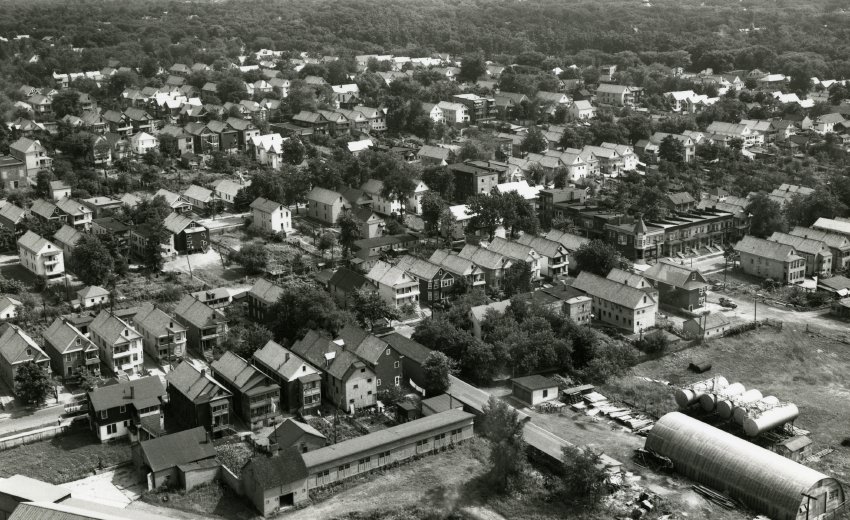
View of the Goose Hill neighborhood from the top of the Seneca St. tower, circa 1950. Photo from the Larry Hart Photograph Collection, Grems-Doolittle Library.

City and Town Historians scanning and consultations - SCHS has always built and maintained relationships with the county and municipal historians in our area. Our collections often support their research and they’ve regularly contributed to our programming and publications. In the past few years, we’ve expanded our work with the municipal historians to include digitizing and preserving at-risk items in their collections, consulting on preservation and archival processing, and providing guidance on collection development and record-keeping.

Jazz collection with Susan Brink - We often work with individuals, families, and organizations to add their archival collections to the SCHS Library, and we’re always excited to talk to them about how their materials connect to broader Schenectady County history. Occasionally, an individual contacts us about collaborating on a collection that is broader and more varied in scope. This is an example of such an undertaking: Susan Brink, journalist and producer, has been active in the jazz community for years and recently started collecting Schenectady’s jazz history, focusing on the musicians and organizers who kept jazz alive in our area. The collection is now part of the SCHS Library and we’re excited to continue working with Susan and other jazz aficionados to build the collection.

Poster for the 16th Annual Accordion Center Band Concert, 1960, from the Jazz Collection, Grems-Doolittle Library.

Collaborative Knowledge Center and Digitization Hub - Two years ago, SCHS was invited to serve as the Capital Region’s Diversity and Collaborative Knowledge Center by the NYS Archives Partnership Trust. This was part of a grant project to expand access to historical materials related to underrepresented people and events in NY state history, train K-12 teachers on how to access and use these materials in their classrooms, and develop relationships between educators, historians, archivists, and institutions in our area. We’ve continued serving in this capacity this year and supporting institutions in our area who are working to digitize and describe materials in their collections and increase access to those resources. One example from this year: Historic Cherry Hill used our scanning equipment to digitize a set of diaries which document race, class, gender relations, household management and economy, and family structure in one Gilded Age Albany household. The diaries will soon be available on NY Heritage.

It’s also important to talk about the day-to-day, continuous work like processing collections, digitizing materials, transcribing documents, preserving items and collections, cataloging, and creating guides and other discovery tools. Thanks to our fantastic volunteers, we make steady, significant progress on our preserving priorities, make our collections discoverable and available for researchers, and use the materials for exhibits and education. In 2024, I plan to spend more time posting about the day-to-day, behind the scenes operations of the library. I hope you're able to take time to reflect on this past year, rest and recharge, and look to new year with excitement!

Tuesday, November 1, 2022

What happens to donated archival materials at SCHS?

Over at the Grems-Doolittle Library, we love everything about October. What’s not to love? There’s peak leaf peeping, sweater weather, apple everything, and of course, National American Archives Month! This October, the Grems-Doolittle Library staff and volunteers were busy preparing for our new shelving system and looking forward to many more years of collecting the documentary heritage of the county once the system is in place! However, many librarians and archivists across the country celebrated National American Archives by pulling back the curtain and revealing some of the behind-the-scenes work that goes into making archival materials available and accessible for current researchers and future generations of researchers. While I'm little late to the party, I wanted to join in the spirit by talking a little about what happens when people donate their personal papers, family archives, or organizational records to the Grems-Doolittle Library.


The first step in any archival donation is reviewing the materials with the donor. At SCHS, we use our Donation Questionnaire and Donation Guidelines to get the conversation started. For example, I need to know how much material is currently in the possible donation, what types of materials are included (e.g. documents, photos, framed items), how the material is currently stored or organized, and how the material came to be in the donor’s possession. I’ll ask follow-up questions to figure out how the material relates to Schenectady history, the materials we already have in the collection, and our ability to care for the materials long-term. Our Collection Development Plan informs and guides the decisions we make about what donations to accept. If I decide to accept the donation and add the materials to our collection, the donor needs to sign a deed of gift and we’ll then need to set up a date and process to transfer the materials.

When the donated collection arrives, I evaluate it for preservation/intellectual property/privacy concerns and create a processing plan. The processing plan explains what work needs to be done so the collection can be safely stored, properly documented, and easily accessed by future researchers. It includes the decisions that I make as the SCHS archivist and my rationale so that future archivists and curators can build on those choices or use the collection for exhibits and special projects. The library's highly skilled volunteers help with this processing, but we may also engage a library science/archives/history intern, depending on the season and the amount of work involved.

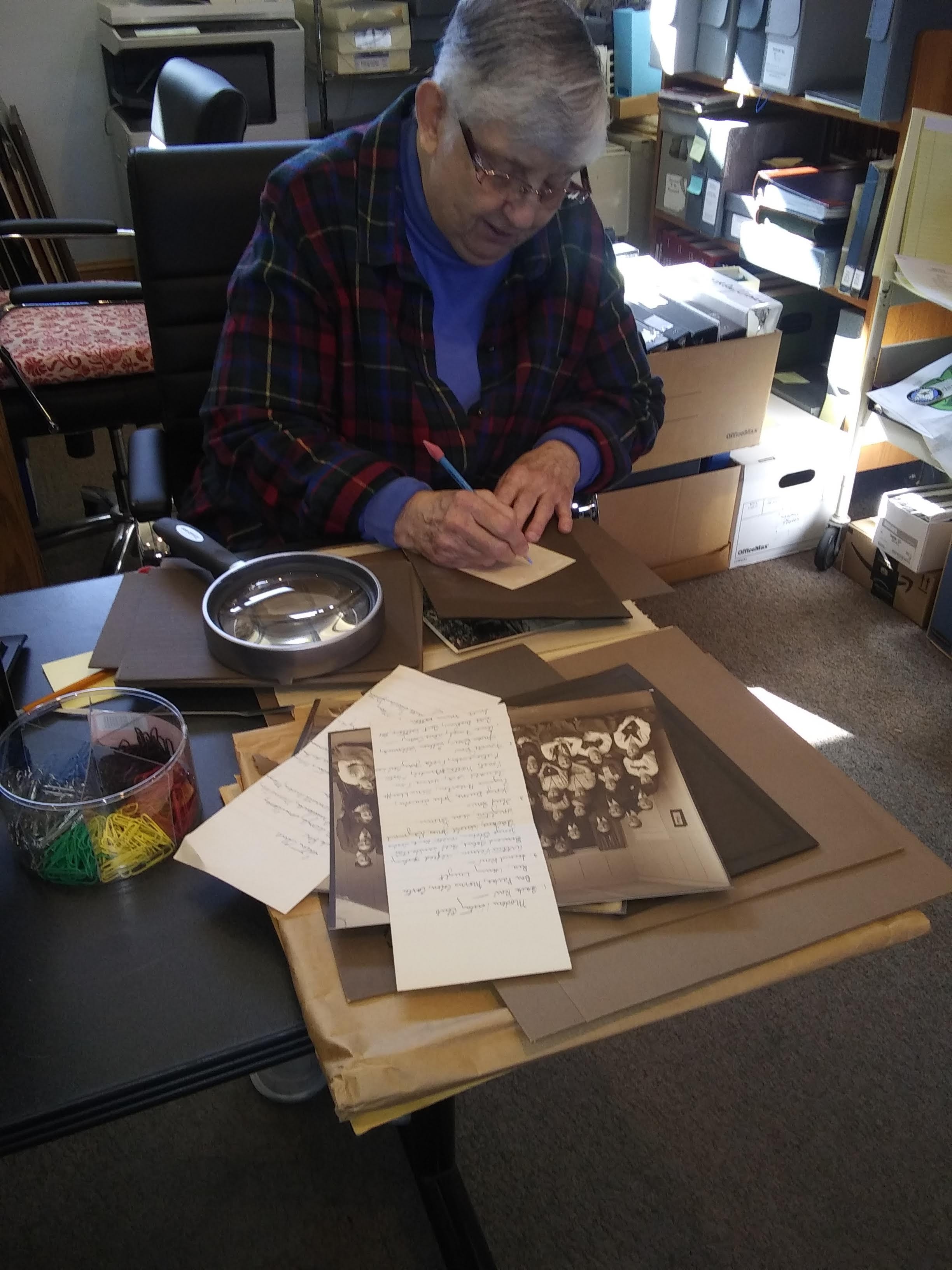
An older woman sits at a desk writing notes about the historic photos spread out in front of her. A magnifying glass sits on the desk to her right.
Carol, a retired librarian and one of the library's longest-serving volunteers, works on researching and describing materials in a donated collection.
 

For every accepted donation, we catalog the collection in our online catalog. The materials often need to be arranged for best preservation and ease of use by future researchers. Sometimes this means maintaining the original order used by the collection creator (scrapbooks, for example), but it often means creating a logical order out of something that seems like chaos. Information provided by the donor can be helpful in determining the arrangement, especially if there are any privacy or intellectual property concerns. For example, a collection of photographs could be organized by the contents of the photos (e.g. all of the portraits together) or by photographer if there is more than one. If the intellectual property is held by the photographer and not the donor, it often makes more sense to organize the photos by photographer so that we can more easily answer questions about copyright, digitization, and duplication. Finally, we describe the collection in a finding aid. Finding aids provide information about the collection to help researchers identify relevant materials and navigate access and use of the collection. They are usually more detailed than the entries in the online catalog, and they follow a format that most other archival repositories use. In addition to our online catalog, researchers can find our collections using EmpireADC, a state-wide finding aid discovery platform. 

After the initial cataloging, we transfer the materials into archival/preservation housing such as acid-neutral folders, photo sleeves, and specialized archival boxes. While we work on processing the collection, the library volunteers and I implement necessary preservation solutions such as creating digital copies of at-risk media like VHS tapes, copying newsprint materials, isolating materials that may have mold or pest damage, flattening rolled or folded materials, and stabilizing oversized/fragile/damaged materials. Once the collection is processed and stabilized, the materials are stored with the other archival collections in our climate controlled vault. We regularly monitor the area for preservation concerns such as changes in heat/humidity or the presence of damaging agents such as pests and water. 

A young woman with curly hair stands next to a table, bending over and holding a camera, taking a photo of a scrapbook. The scrapbook sits on a table with lights and gray foam blocks to make photographing it easier.
Brynn, one of our newest library volunteers and soon-to-be library science student, photographs a donated scrapbook. Scrapbooks often present a variety preservation concerns, so photographing is one way we can preserve the content.
 

Researchers who want to view or use the collection can make appointments in the library. The finding aid will note if any materials are restricted due to privacy, intellectual property, or preservation concerns. As the collection is used, we may need to update the finding aid and catalog record with any new additions to the collection from the donor or new information that comes from researchers using the collection in the future. Materials in the collection that appear to have significant research value (e.g. something unique to Schenectady's history or a person with a regional/national/international impact/reputation) and clear intellectual property rights will be evaluated for potential digitization and future blog posts or other promotional activities. We add digitized collections to our NY Heritage site.

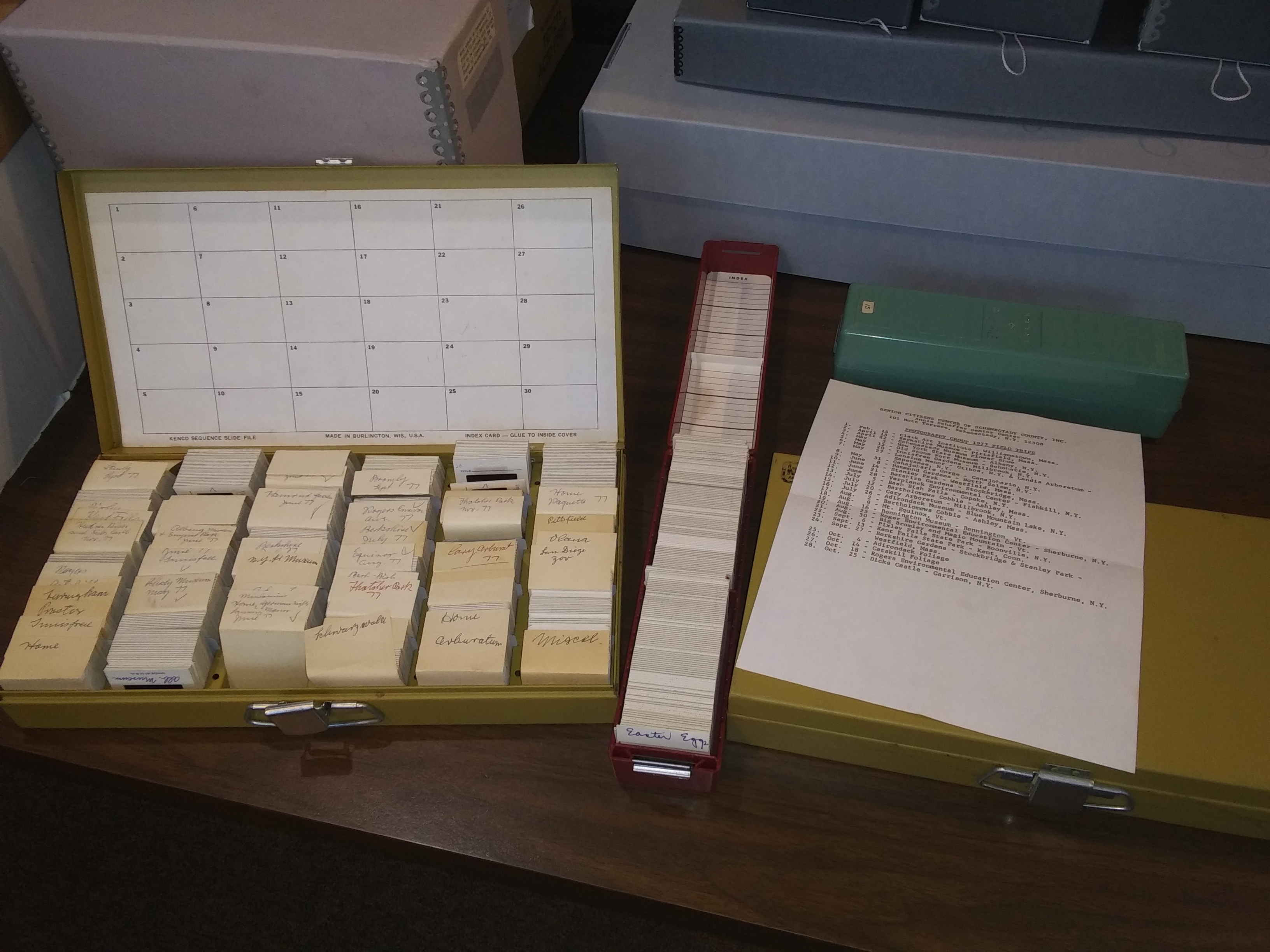
Part of a newly donated collection of slides from the Annie Schaffer Senior Center Photography Club, ready to be processed.