Showing posts with label Schenectady County. Show all posts

Wednesday, December 18, 2024

Pharmacies around Schenectady

The peak of cold and flu season is fast approaching, and many of us are heading to our local pharmacy to stock up on medications, COVID tests, masks, and other essentials to get us through the season. Pharmacies are essential businesses in our communities and pharmacists have years of medical expertise to draw on when they help us decipher our prescriptions, recommend an OTC remedy, or administer vaccines. While the concept of creating and selling the remedies for what ails us can be traced back to medieval apothecaries, pharmacies as we know them today are only about 200 years old.

The SCHS Library recently received a donation of a pharmacy prescription book from Kerste’s Pharmacy. The donor asked us whether Kerste’s was “the oldest pharmacy in Schenectady” - a question that led us down a research rabbit-hole. Our answer to that question and other information that we found in our research will be compiled in a future blog post, but we wanted to take a moment to share some of the materials in the SCHS collections that relate to the history of pharmacies in our area.

Page from one of the Kerste's Pharmacy prescription books showing prescription notes pasted into a large ledger. Kerste's Pharmacy Records: ledgers of prescriptions processed through Kerste's Pharmacy,  1886, 1918, 1945.


Henry Kerste and two assistants mixing prescriptions in the pharmacy. Larry Hart Photo and Research Collection.

E. Steinfuhrer Drugs and Medicines. Southeast corner of Ferry and State Streets. Photo from the Grems-Doolittle Library Photo Collection.

Ad for Richard Fuller, Druggist and Apothecary from the Grems-Doolittle Library Clippings Collection, Pharmacies File.

Ad for William Sauter, Pharmacist, in the 1896 Schenectady City Directory from the City Directories Collection.

Learn more about the SCHS Library collections on our website, https://schenectadyhistorical.org/collections/, and our Guide to the History of Medicine in Schenectady County: https://schenectadyhistorical.org/wp-content/uploads/2010/07/History-of-Medicine-in-Schenectady-County-Research-Guide.pdf

Friday, November 8, 2024

Schenectady's Own Band of Brothers

This post was written by library volunteer Gail Denisoff.

For the tenth year, the Downtown Schenectady Improvement Corporation is honoring past and present Schenectady County service members through the Hometown Heroes banner program. Hanging from Memorial Day to Veteran's Day, these banners recognize brave men and women from Schenectady County who have answered the call to serve.

The Schenectady County Historical Society often nominates a candidate from Schenectady's past for a banner. This year we have nominated two brothers from Schenectady County who served during the Civil War. Jacob and Martin DeForest were not the only members of their family to enlist, however. Five DeForest brothers joined the Union effort. All five were wounded in battle with at least one later succumbing to his injuries. The DeForest brothers were not strangers to military service. Both their grandfather and great-grandfather fought under George Washington during the Revolutionary War. Below are brief biographies and service details for the DeForest boys, Schenectady County’s band of brothers.

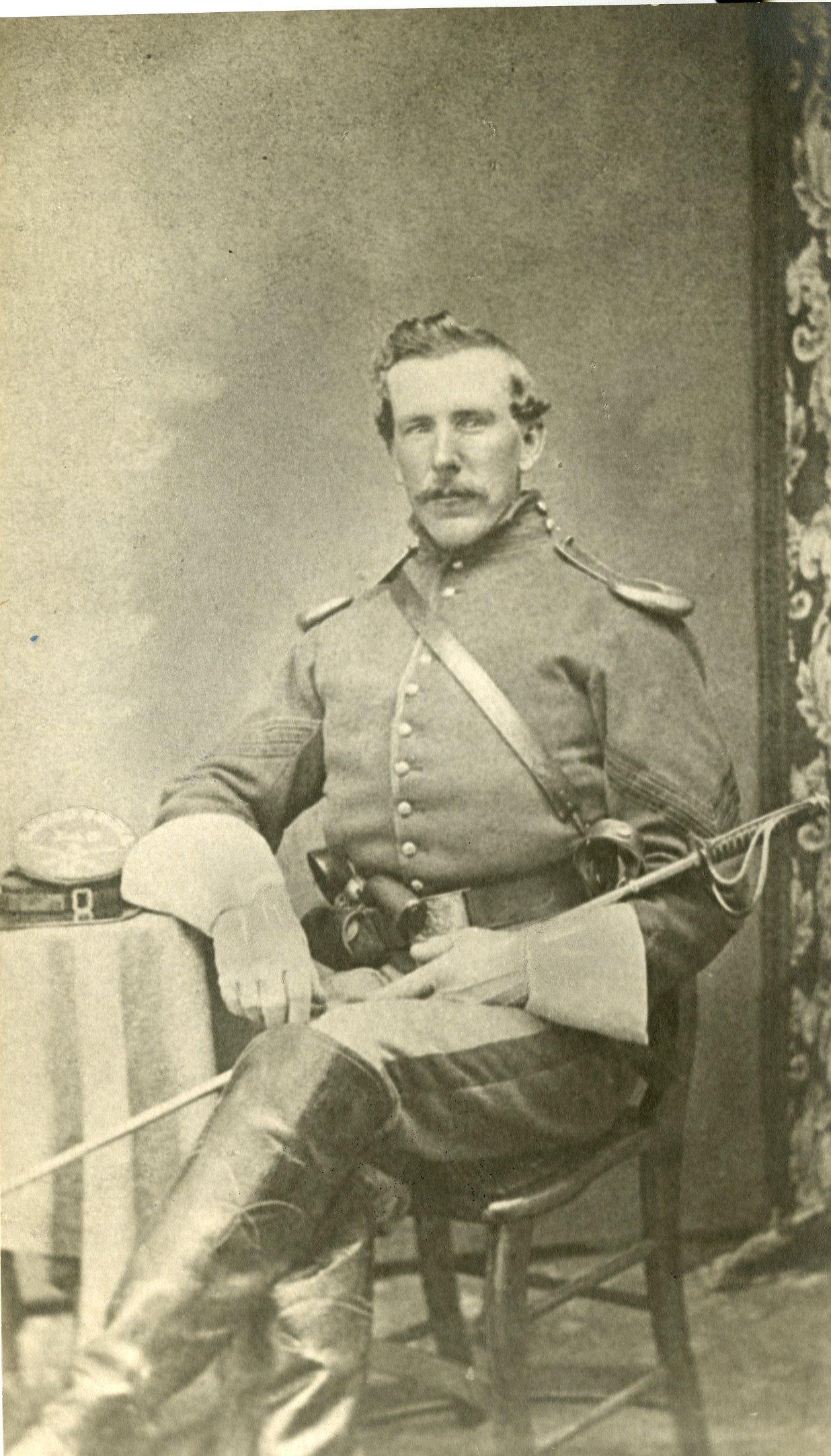
Portrait of Jacob DeForest in military uniform. From the DeForest Family File at the Grems-Doolittle Library.
 

Jacob J. DeForest, born in Rotterdam, Schenectady County, on October 10, 1820, was the oldest of the 12 children of Jacob and Anna Schermerhorn DeForest. He was educated at the Schenectady Lyceum under the tutelage of Rev. Dr. Huntington, then taught a winter term of school in Rotterdam. Soon after, he apprenticed himself with James A. Van Voast, a prominent carpenter and builder in Schenectady. Following the completion of his apprenticeship in 1844, he moved to Albany where he worked as a successful contractor in his own businesses.

Jacob had a lifelong interest in the military and was commissioned as an engineer of the 25th Regiment of the 11th Brigade, 3rd Division, of the State of New York on December 28, 1855. At the outbreak of the Civil war in April of 1861, at the age of 40, he was placed in charge of a recruiting center in Albany and served until the following August during which time 30 volunteer regiments of New York were recruited and organized. He was then sent to Oswego, where he organized the 81st Regiment of NY Volunteers.

On February 19, 1862, Jacob was commissioned lieutenant colonel of the 81st Brigade and on July 1 promoted to colonel. The regiment became part of the Fourth Corps of the Army of the Peninsula under the Command of General Keyes and a part of McClellan’s Army of the Potomac Peninsular Campaign. On May 31, 1862, he was shot through the left lung at the battle of Fair Oaks, Virginia. Jacob was sent to Douglas Hospital in Washington, and then furloughed home to recover. He rejoined his unit on September 1 and sent to North Carolina where he participated in the unsuccessful Siege of Charleston. Because of his disability from his earlier wound, Jacob was hospitalized again and mustered out September 1, 1864, although retained command of the regiment until the end of the war. After the war, he was on the staff of former New York Governor Morgan for a time and was one of the escorts who accompanied the remains of President Lincoln through the state. Soon after, he returned to work the family farm in Duanesburg, NY, and was active in community affairs, especially regarding school and educational matters. He was a friend of Horace Greeley during the abolition movement and a longtime member of the Masons and Odd Fellows.

Jacob J. DeForest had three wives, the last surviving him, and 12 children, 5 of whom died at birth or as young children. In the summer of 1903, he supervised the building of a new home at Cady’s Corners in Rotterdam, where he died on March 14, 1904, at the age of 83. He is buried at Prospect Hills Cemetery in Guilderland.

Portrait of Bartholomew DeForest in military uniform. From the DeForest Family File, Grems-Doolittle Library.
 

Bartholomew Schermerhorn DeForest was born in Rotterdam on February 9, 1823, the second child of Jacob and Anna DeForest. He worked as an architect in Albany before enlisting on August 26, 1862, at the age of 39. He obtained the rank of First Lieutenant, was assigned to the 81st New York Infantry, and served as Quartermaster from September 1, 1862, to September 19, 1864. He was injured in battle and mustered out with a discharge disability on September 19, 1864.

Bartholomew married Elizabeth Walker in 1847 and had two daughters. The family moved to Cleveland, Ohio, after the war where Bartholomew continued his architectural career. He died in Cleveland on April 30, 1886, at the age of 63 and is buried in Vale Cemetery in Schenectady.

John Teller DeForest was born December 27, 1830, the sixth child of DeForest family. He worked as a carpenter in Albany with his brother, Jacob, before enlisting in Oswego on September 23, 1861, at the age of 31. He was assigned to the 81st New York Infantry. He rose to the rank of Captain before being injured in battle and mustering out on August 10, 1864, with a discharge disability.

John was married to Emeline Stevens and had a son. He died of complications of his wartime injuries on May 25, 1866, at the age of 35, in Oswego and is buried in Mount Adnah Cemetery, Fulton, Oswego County. 

Portrait of William DeForest in military uniform. From the DeForest Family File at the Grems-Doolittle Library.

William Freeman DeForest was the eighth child of the family born on April 28, 1836, in Rotterdam. He enlisted at the age of 26 on January 25, 1863. He was assigned to the Second New York Calvary with the rank of Sergeant. He was wounded at Ashby's Gap Virginia and mustered out with a discharge disability on September 4, 1864.

After the war, William moved to San Francisco and worked as a trader. In the 1870s he was an agent for the Eureka Hair Company. He married Maggie Cosgrove in San Francisco in 1878 and died there some years later.

Portrait of Martin DeForest in military uniform. From the DeForest Family File at the Grems-Doolittle Library.

Martin J. DeForest was the ninth child of the family, born on June 23, 1839, in Rotterdam. He enlisted in the 25th Regiment of the New York State Militia on September 21, 1861 at the age of 22. He reenlisted in the 81st Infantry, New York Volunteers, and served with that regiment throughout the war. He was severely wounded in his left leg on June 3, 1864, at the Battle of Cold Harbor, Virginia, resulting in the amputation of his left foot. He was discharged with the rank of Captain on October 23, 1864, because of his injuries. In 1865, he was appointed Second Lieutenant, 3rd Regiment of the Veteran's Reserve Corps, and worked in the Bureau of Refugees, Freedmen and Abandoned Land, discharged in 1868.

Martin married Harriet Carmichael in 1866 in Sparta, Westchester County. He worked as a clerk in the Registry Department of the General Post Office of New York for 40 years, living in Brooklyn. He died on February 8, 1908, leaving a second wife and four children. He is buried in Sparta Cemetery, Westchester County.

There is some evidence that a sixth brother may have briefly served in the Union Army. Richard DeForest was the 12th child of the DeForest family, born on August 9, 1844, in Rotterdam. He enlisted at the age of 19 on May 31, 1862, as a private in the 25th Infantry of the New York State Militia. He mustered out in Albany less than four months later on September 8, 1863. Richard died at Cady's Corners, Rotterdam on April 22, 1869 at the age of 24.

The brothers of the DeForest family served the Union faithfully throughout the Civil War risking life and limb. They are part of a proud heritage of Schenectady military heroes.

The Schenectady Hometown Heroes banners will be up along State Street from Washington Avenue to Veterans Park until Veterans Day. More banners can be found along Clinton Street between Liberty Street and Union Street. Please visit https://downtownschenectady.org/portfolio/honoring-the-2024-hometown-heroes/ for more information on the program and 2024 banners. The banners for Jacob and Martin DeForest share a pole on State Street near the corner of Washington Avenue.

Friday, July 30, 2021

Lucky Lindy Visits Schenectady Airport as Part of National Tour

This post was written by library volunteer Diane Leone.

Photo of Charles Lindbergh wearing flight jacket and smiling for the camera
Charles Augustus Lindbergh, Jr. (1927), photo by Underwood & Underwood. National Portrait Gallery.

Charles Lindbergh’s nonstop solo flight from New York to Paris ranks as one of the greatest achievements in the annals of aviation history. Following this feat, Long Island multimillionaire Harry Guggenheim convinced the aviator to embark on a three-month tour of the United States in his famous Spirit of St. Louis, in an effort to boost the newly developing field of aviation. The trip, financed by the Daniel Guggenheim Fund for the Promotion of Aeronautics (named after Harry’s father), began on July 20, 1927 at Long Island’s Mitchel Field and ended on October 23 at the same location. In the end, Lindbergh visited 92 cities in 48 states. Schenectady was fortunate to be included in that roster.

The still unfinished Schenectady Airport, a visible symbol of the growing interest in aviation, was the perfect location for this highly anticipated event.  Only months before, on February 9, the city’s chamber of commerce optioned land for the facility, which was to be funded by interested citizens. Within one week of the June fund drive the considerable sum of $121,000 was raised for the project, promoted in part by a highly visible billboard in the area of Erie Boulevard announcing that “Lindbergh made his goal . . . so can Schenectady.” Construction followed, with the official airport opening occurring on May 26, 1928, ten months after Lindbergh’s visit. Schenectady was the first American city to boast a community-owned airport, now owned by the county.


Lindbergh posing before "Spirit of St. Louis," hangar 16, Curtiss Field (Long Island), May 1927. Cradle of Aviation Museum, Garden City, NY.
 

Lucky Lindy’s stop in Schenectady followed a number of stops in the New England states as well as Albany.  On July 28, he flew from the New York State capital to Schenectady, detouring up the Hudson, and passing over Troy, Glens Falls and Lake George, before circling back to the Electric City and landing one hour and forty-five minutes after leaving Albany. Preceding the aviator’s highly anticipated visit was his escort plane, arriving at 11:30 am. Ten minutes later, the Spirit of St. Louis approached from the east, looping back over part of the city’s commercial district before arriving at the airport. As the aviator neared the field, the Schenectady Gazette reported that he thrilled the exuberant crowd before landing:


He greeted the waiting multitude with a beautiful executed “zoom” which thrilled everyone. Gliding his plane to within 250 feet of the field he suddenly nosed upwards and raced almost straight into the air for a thousand or more feet. Then he circled, banked, dove and finally glided gracefully down the field to where the reception committee was waiting to extend him an official greeting ("Heroic Flier's Reception” 1).


The city’s leaders had prepared extensively for this event. Almost all city offices closed from 10am to 2pm, and many businesses allowed their employees time to enjoy the occasion. Automobile and pedestrian traffic was directed by a contingent of police, state troopers, National Guard ,and local Officers’ Reserve Corps. In an effort to reach a wide audience, the speeches were broadcast through the WGY radio station. A Schenectady Gazette loudspeaker on State Street transmitted the reception to the downtown area. 


In spite of the sweltering heat, the event attracted a crowd of approximately 25,000 people, streaming in on foot and by car, all eager to see the world-renowned aviator with boyish good looks. As Lindbergh exited his aircraft, clad in an aviator helmet, goggles, and a leather jacket worn over a suit and tie, he was welcomed by several local dignitaries, including some from neighboring cities and towns. Schenectady mayor Alexander T. Blessing opened with a welcoming address, followed by short speeches given by Martin P. Rice, director of publicity and broadcasting for General Electric, and John F. Horman, Schenectady Chamber of Commerce president. Rice spoke about the pivotal role of the city in the fields of transportation and communication, and emphasized the importance of electrical power to the future of aviation. Horman spoke proudly of the city’s airport, expressing his determination to make it a class A facility as defined by the Department of Commerce, and transform it into a regional hub. In fact, he noted that Colonel Lindbergh chose Schenectady as a stopping point “because he knew and recognized that our city is air-minded and alive to the possibilities of commercial aviation, because our citizens have established and own this airport, and that he wanted to congratulate our city in consequence” ("Address of Welcome" 16).


Charles Lindbergh speaks on WGY radio from the Schenectady County Airport, photo by General Electric Company. miSci-Museum of Science and Innovation.

Lindbergh’s speech focused on the need for the US to develop commercial aviation, which required the confidence of the public. He went on to list the four criteria needed to establish that confidence as “airworthy aircraft, adequately maintained; competent pilots; suitably equipped airways and airports; standard air traffic rules” ("Address of Welcome" 16).


Following the addresses, the colonel, standing in the rear of a truck adorned with an American flag, was driven around the field, often saluting in response to the cheers and blaring automobile horns of a wildly exuberant crowd. He then engaged in a fifteen-minute round of hand-shaking and autographing items for the public. Lindbergh also examined specifications for the development of Schenectady’s new airport. During his brief visit, he paid tribute to the city’s contribution to commercial aviation: “Plans for the development of your port are magnificent and now that you are started in the right direction you people here in Schenectady should get behind this airport and make it a prominent place on the airmap. The greatest need in the development of commercial aviation is the setting up of ports such as you have here in Schenectady” (Heroic Flier’s Reception” 1).

The tour’s tightly packed schedule had Lindbergh leaving after about a half hour, heading for Syracuse via the cities of Utica, Little Falls and Rome. Upon departure, Lindbergh once again entertained the crowd with several aerial maneuvers.

Other famous aviators also landed at the airport, including Amelia Earhart, who touched down on March 27, 1929 and gave a radio address on WGY. A little more than two years later Harold Gatty and Wiley Post, who had recently smashed the previous record in an around-the-world flight, were honored by GE after landing their Winnie Mae.

Gatty and Post's plane, Winnie Mae, at the Schenectady Airport. Photo from the Larry Hart Collection, Grems-Doolittle Library.

Having achieved enduring fame as a daring and skilled aviator, Lindbergh later became indelibly linked to the tragic kidnapping and murder of his young son. Perhaps lesser known are his isolationist views prior to World War II, as well as his antisemitism.  In 1927, however, he was America’s golden boy. As Lindbergh living history performer Tim Clark notes, “He came along at an interesting time when the country was looking for a hero. He displayed all the values you want to see in your hero: modesty, courage, sacrifice, and he did all for the advancement of aviation” (Buell).

Lindbergh’s Guggenheim Tour had a significant impact on aviation.  According to Richard P. Hallion, an Air Force historian who wrote a book on the Guggenheims, the use of airmail increased dramatically, as did the public’s perception of the feasibility of air travel. Locally, the visit helped raise funds for the completion of the airport. Bud Matthews, former president of the Empire State Aerosciences Museum, noted that “there were a lot of airports being built in the U.S. around that time. His [Lindbergh’s] visit really helped put Schenectady on the map” (Buell).

For those interested, the Grems-Doolittle Library owns a DVD (DVD Hart 974.744 Fir Ref) which includes brief highlights of this historic event.

Lindbergh, wearing a pilot's flight helmet and overcoat, shakes hands with a man wearing a suit
Lindbergh and Mayor Blessing. Photo from the Larry Hart Collection, Grems-Doolittle Library.

Works Consulted

"Address of Welcome, Speeches to Inform Lindbergh of Airport Here, Flier's Account of Progress in Air." Schenectady Gazette, 29 July 1927, p. 16. https://news.google.com/newspapers?id=kXlGAAAAIBAJ&sjid=JukMAAAAIBAJ&pg=1021%2C2939227

Buell, Bill. "Schenectady County Airport Marks Lindbergh Visit in 1927." Daily Gazette [Schenectady], 23 July 2017. https://dailygazette.com/2017/07/23/county-airport-marks-lindbergh-visit-in-1927/

"Gazette Speaker to Broadcast Sound of Lindbergh Reception." Schenectady Gazette, 28 July 1927, p. 1. https://news.google.com/newspapers?id=kHlGAAAAIBAJ&sjid=JukMAAAAIBAJ&pg=6901%2C2723020

"Guggenheim Tour—48 States, Visited 92 Cities,..." Charles Lindbergh: An American Aviator, Spirit of St. Louis 2 Project, 2014. http://www.charleslindbergh.com/history/gugtour.asp

Hart, Larry. "Schenectady Caught Aeroplane Fever in 192...and Built Port Schenectady." Schenectady Gazette, 15 Oct. 1971, p. 25. https://news.google.com/newspapers?id=BXshAAAAIBAJ&sjid=1okFAAAAIBAJ&pg=2038%2C3780697

"Heroic Flier's Reception Here Equals That Given by Other Cities on Route." Schenectady Gazette, 29 July 1927, p. 1. https://news.google.com/newspapers?id=kXlGAAAAIBAJ&sjid=JukMAAAAIBAJ&pg=1178%2C2852824

"Lindbergh in This City Today, Police Plan to Handle a Huge Throng at the New Airport." Schenectady Gazette, 28 July 1927, p. 1.https://news.google.com/newspapers?id=kHlGAAAAIBAJ&sjid=JukMAAAAIBAJ&pg=1207%2C2722491

Wilkin, Jeff. "Lifestyles." Daily Gazette [Schenectady], 25 July 2002, pp. D-01. NewsBank,  infoweb.newsbank.com/apps/news/document-view?p=NewsBank&docref=news/110FA8F990A98684  

Wednesday, April 29, 2020

Historical Significance and Historical Markers


What we know and understand about the past is just the tip of the iceberg. Of everything that happened to people throughout time, only a fraction of evidence has survived the passage of time, and even that fraction is often too much for all of us to remember. So, how do we determine what is worth remembering, and how do we share our knowledge and understanding with each other and future generations? The concept of significance helps direct historical research and education.

New York State Historic Marker on State Street showing the location of Clench's Tavern. Photo from the Grems-Doolittle Collection. George Washington is obviously a significant historical figure, but what else can we learn from this marker?
It’s easy to say that historically significant people and events are ones that resulted in a great change for a large number of people. If we all wrote a list of people and events that match that criteria, our lists would include a lot of the same entries; for example, the American Revolution, Martin Luther King Jr., the ratification of the 19th Amendment, and Thomas Edison and his incandescent light bulb. Historic firsts are also generally considered significant. These people and events connect to other people and events in the complicated web that makes up our history; the more connections, the greater the significance. According to The Historical Thinking Project funded by the Department of Canadian Heritage, “A historical person or event can acquire significance if we, the historians, can link it to larger trends and stories that reveal something important for us today.” Age does not guarantee significance. A 200-year-old building is notable because few structures survive that long, but it's not necessarily significant. The key questions are "How does this connect with the rest of history?" and "What evidence exists to support those connections?"

Historic marker commemorating the Crane Street railroad station.
Photograph courtesy of Frank Taormina. This is the first railroad station in Schenectady and connects our city to the early history of the railroad, one of the most significant industries in our nation's history.

There are levels of significance: personal/familial (people, places, and events that are significant to you and your loved ones), local, regional, statewide, and national. These levels reflect the connections to other aspects of history, the number of people who are or were impacted, and the perspectives, biases, and access to historical evidence of our communities. Previous generations of historians and community leaders emphasized the study of white, upper- and middle-class men in history. People of color and white women have always been active and important in starting, shaping, and directing events, communities, and ways of thinking, but the evidence of their involvement was overlooked, neglected, and sometimes deliberately erased. Thus, with few exceptions, they were deemed not significant. This has been changing, but we have a lot of catching up to do.

In 1929, the Schenectady Chapter of the Daughters of the American Revolution installed this monument to the Schenectadians who were killed during the Beukendaal Battle. Photo from the Grems-Doolittle Library Photo Collection

We learn about historically significant people, places, events, philosophies, and movements in school, but there are many other ways to learn about them and many ways to share that knowledge. Institutions like SCHS play a vital role in this, but we aren’t the only venue. Historical significance plays a role in who and what is depicted on our money, stamps, and street signs. Historical significance informs our public spaces from where they are located to what they are named and the artwork and statues displayed in them. For example, the Schenectady County Forest Preserve in Duanesburg is “historically significant as one of James Duane's original Great Lots where remains of stonewalls, a farm house foundation and a small family cemetery can be found” (Schenectady County Nature Preserves and Trails). We’ve all seen historic markers, plaques, statues, and memorials (like the examples featured in this post) displayed in our public spaces.

37 Front Street was the site of the Eleven O'clock House. The name referred to the custom of craftsmen and shopkeepers stopping work for a drink at that hour of the morning. Is this building significant? Photo from the Grems-Doolittle Library Collection.
We all know that where an event happens impacts how it unfolds. Markers and plaques provide a physical reminder of the significance of a place to our history. They focus our attention on a concrete point, a quick glimpse into the past. While they can’t convey abstract patterns and nuanced details, markers can be a starting point in learning the complex, intangible connections in an area’s history and culture. They are valuable in travel, tourism, education, and memorial events, particularly when combined with dynamic methods of exploring history like tours. As part of the public space, the community determines their creation and maintenance. The next time you are out walking or driving, take note of the markers you pass. What do they tell you about the community? What questions do they inspire?

There are plenty of places in our county that have historical significance, but are currently unmarked. If you could pick any place in Schenectady County for a new historical marker, where would it be? What is the significance of that place? What would the marker say? The Schenectady County Historical Society wants to hear from you!

 Learn more about the historic markers included in this post:
-Railroad Beginnings in Schenectady
-Taverns and Inns of Schenectady, Part II: Tapsters in a Time of Crisis
-Taverns and Inns of Schenectady, Part III: From Taverns and Inns to Hotels and Saloons
-The Battle of Beukendaal
-The Historical Marker Database

Saturday, March 14, 2020

What's in the box? Opening the County Home Time Capsules

Time capsules have been a popular way of commemorating and documenting occasions like anniversaries, business openings, significant calendar years, and completed construction. Creating a time capsule is a way to engage the community, reflect on the occasion or current moment, and communicate with future generations. Setting a time capsule can be a celebratory event, but unsealing one is often a delicate process. It's often difficult to know what kind of deterioration has happened to the materials inside. Unfortunately, capsules are often lost or damaged. Sometimes, we get lucky and everything goes well, the contents are undamaged, and the capsule completes its purpose.

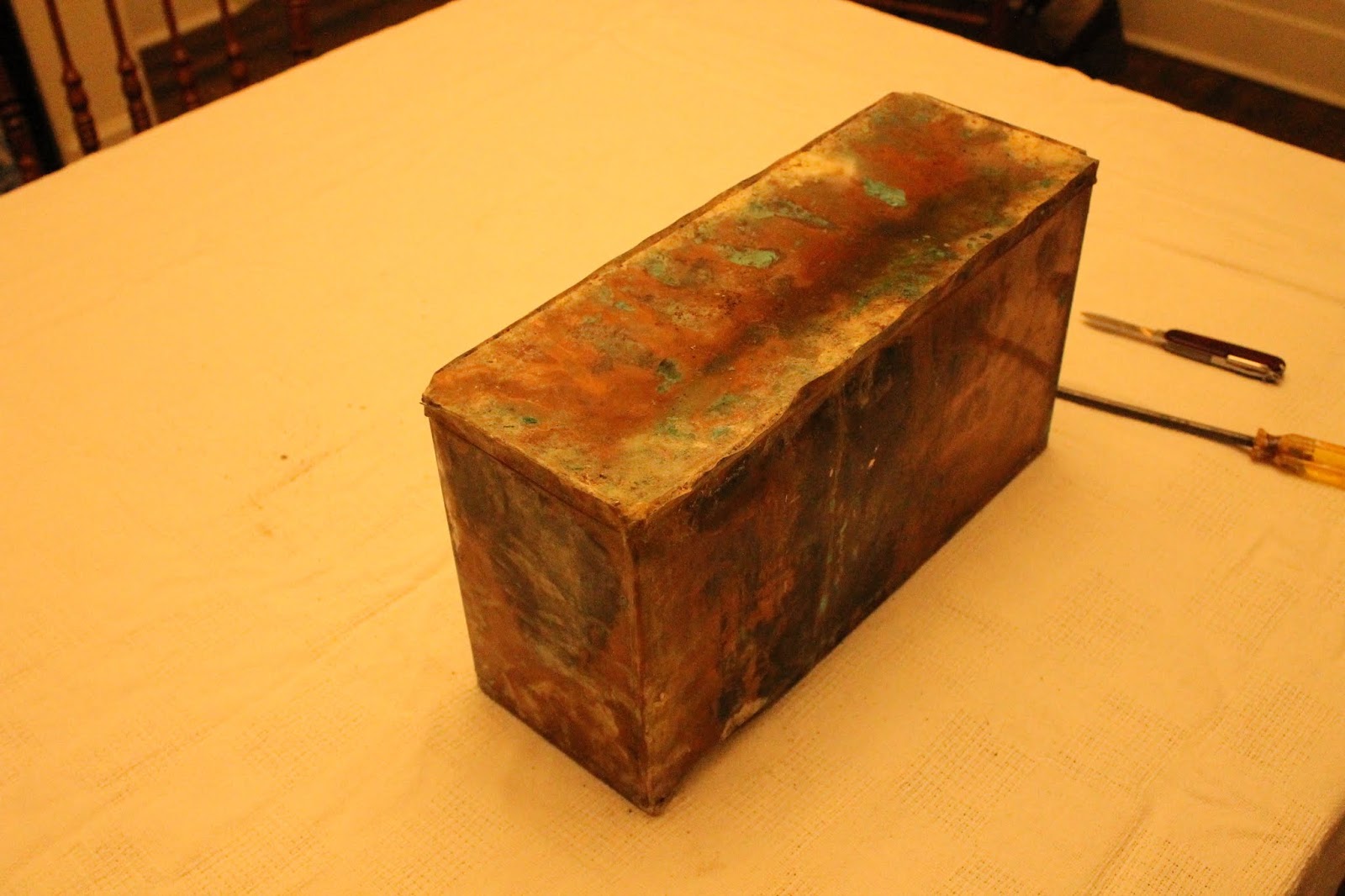
A few weeks ago, County Historian Bill Buell arrived at the Grems-Doolittle Library with two copper boxes. They had been found in a closet in the County Office building and nobody was sure where they came from. We decided to open them up and take a look.
What's in the box? This sealed copper box was found in a closet without any accompanying documentation.

One of the boxes was unsealed, so we lifted the lid and discovered a cache of newspapers, documents, and books. There was also a milk bottle cap. One of the documents revealed the box's purpose: commemorating the completed construction of the Schenectady County Home in 1934.
Program in Connection with Laying of the Cornerstone of the Schenectady County Home, July 14, 1934.

The Schenectady County Home is now called the Glendale Home. We decided that the time capsule was likely unearthed during the 2015 demolition of the Glendale Home facilities. We speculated that other box was a time capsule from a later addition to the County Home, but the box was sealed and we couldn't confirm until we opened it.
John, our facilities manager and blacksmith, checked the capsule for weaknesses and determined the best approach for opening it without harming the contents.

The capsule was sealed by folding a lip over the edge of the lid and reinforcing it with adhesive. John pried up the edge of the lip and forced a weak spot.

We're in! Once the lip was breached, John could grab the lid and prise it up.

Copper is a soft metal, so we could roll the top back like a sardine can lid. Time capsules usually are designed to be carefully destroyed when opened. If they were easier to open, they would be less effective in preserving their contents.

The first item emerges! The contents of this capsule are in good condition which shows how well the capsule did its job.

Like the previous capsule, this one contained newspapers, documents, and books. It did not contain a program explaining the occasion, but one of the documents was a speech titled "Remarks by Harold F. Lews, Chairman, Board of Supervisors. Dedication of Infirmary Building - October 30, 1960." One of the newspapers contained an article describing the addition of the Infirmary to the County Home.
Time capsules often include newspapers from the day the capsule is interred.
The 1960 time capsule included 31 cents and a Certs mint. Coins are often included in time capsules. We decided not to eat the mint, though it seemed to be in excellent condition.

For more information on the history of the County Home, check out the following sources:

Friday, July 7, 2017

Schenectady's Colorful Canallers

This post is written by SCHS library volunteer Diane Leone

The Erie Canal running through Schenectady. This sketch is from
the December 1873 issue of Harper's New Monthly Magazine.
The Erie Canal was one of the country’s most ambitious engineering undertakings. Completed in 1825 after eight years of construction, this marvel connected Lake Erie with the Hudson River, thus opening up the untapped resources of the Midwest to the East coast, which sent both immigrants and manufactured goods west. Although scoffers called the original canal Clinton’s Ditch, it very quickly proved its value, and by 1865, more than 7,000 boats traveled its waters. The waterway was enlarged to accommodate heavier traffic, once in 1862 and a second time in 1895. Eventually the mechanized Barge Canal, completed in 1918, replaced the original canal with its towpath. Still, the “Roaring Giddap,” as the canallers called the horse- and mule-powered canal, left an indelible imprint on the history of the nation.

Along with other cities and towns on the canal, Schenectady was part of a rich store of stories—some tall tales—and songs about those who made their living on the Erie. These canallers, primarily men, were a rowdy lot. As noted canal historian Lionel D. Wyld states in Boaters and Broomsticks: Tales and Historical Lore of the Erie Canal:“They drank deeply, they ate heartily, they fought eagerly, and they sang lustily” (79). After all, they worked long hours at physically demanding jobs in a competitive, even aggressive atmosphere, with hours of monotony punctuated by stops at canal towns which offered ample liquor and other forms of entertainment.

The Craig Hotel in Niskayuna was a popular stop on the hotel. This photo shows owner Jack McPherson behind the bar. Courtesy of the Grems-Doolittle Library and Archives photo collection.
  
Drinking and fighting seem to have been the two chief activities of these boatmen. The literature is rife with examples of canallers’ fondness for spirits, although this reputation derives partly from authors, such as Walter D. Edmonds, known for popularizing the canal in fiction. In Low Bridge! Folklore and the Erie Canal, Wyld includes an iconic song, “E-RI-E Canal, with the apt refrain:

O the E-ri-e was a-rising, And the gin was getting low, And I scarcely think we'll get a drink ‘Till we get to Buffalo, ‘Till we get to Buffalo.  (101)


As Lawrence Naylor notes in The Effects of the Erie Canal on Schenectady, “A boater could get off at Union Street, race down Wall Street to Lou Barhydt’s for a jug of rum, and, if he didn’t stop to sample the merchandise, could dash down Wall Street and hop back aboard at State to continue their journey west” (15). Wyld relates the amusing tale of a boater who brags to the bartender at McClare’s Hotel in Rexford that he can, “…down a gallon of hard cider without taking more than three breaths” (Boaters 45). When the barkeep agrees to the wager, the boater disappears for a few minutes. Upon his return, he chugs down the gallon of cider provided by the bartender.

“Didn’t think it could be done,” he [the bartender] told the canaller, shaking his head in doubt over what he had just seen with his own eyes. The Erie boater wiped his mouth with his sleeve. “T’ tell the truth, neither did I,” he answered with a satisfied grin, “’til I run down to yer neighbor tavern t’ find out!” (Boaters 45)


Alcohol was not only a means of relaxation, but also served as compensation or inducement for preferential treatment. Packet boats, which carried passengers, traveled day and night, and captains were under pressure to reach their destinations quickly. The fourth verse in the song, “Raging Canal,” makes this clear:

The Captain told the driver to hurry with all speed---And his orders were obeyed, for he soon cracked up his lead; With the fastest kind of towing we allowed by twelve o’clock, We should be in old Schenectady right bang against the dock. (Wyld, Low Bridge! 91)


Henry Heilbronner owned a successful
 wholesale liquor store on State Street. 
There's a good chance the bribes for the 
locktenders came from Heilbronners.
Courtesy of the Schenectady History Museum.
Travelers were known to bribe canallers with whiskey to accelerate the boat’s speed through the canal, although vessels traveling faster than four miles per hour risked being fined, since the resulting wakes could damage the canal walls. Boatmen offered liquid tips to the locktenders—who wielded quite a bit of power—to speed up their time in the locks with a surge of water. A captain on the wrong side of the locktender, however, might find his boat unexpectedly bumping up against the sides of the lock.

Given the rate of alcohol consumption, canallers had a reputation for aggressive behavior. To some extent, this was an occupational qualification. Given the busy canal traffic, waiting time for entry into the locks was often long. Delays were bad for business, particularly for packet lines, which had preference over freight boats going through the locks. Competition existed even among packet crews. It was important for a captain to count among his crew intimidating men who could physically enforce their claims. To that end, captains were often handy with their fists, and hired men known as successful brawlers.
An example of an early lock on the canal. Courtesy of the
Albany Institute of History and Art.


Cities such as Buffalo and Watervliet had reputations as places where fighting was rampant. In fact, in the 1860’s, a two-mile area on the Buffalo waterfront was viewed as the “wickedest street in the world.” Apparently, Schenectady was also a hub for scrappers. Referring to the canal around 1850, a 1922 Gazette article, “Schenectady Was One Bright Spot on Erie Canal,” noted that the opening of the canal season in the spring brought the first fight of the season, “…where every quarrel or grudge contracted on the trip between Buffalo and Albany among canal men was fought out” (14). This maiden contest took place in a large open area on Dock Street—now Erie Boulevard—midway between State and Weaver Streets. The contestants were required to be sluggers of great distinction, whose animosity toward each other was stoked by the canallers. The battle ended only when one fighter indicated that he had had enough, which often occurred only after he was in rather dire shape. Following this spectacle, the crowd would proceed to a drinking establishment on Robinson Street where the victor bought drinks for the spectators and the loser, and the imbibing continued, “…until everyone in the party was unable to stand” (14).

So concerned was the city’s governing body about the influence of canallers on the students of both Union College and the attached grammar school that they extended the force of existing laws, which prohibited luring youth into “the vice of gaming” and providing them with “wine or spiritous liquors.” Jeanette Neisuler notes in her article, "When Schenectady and the Erie Canal Were Young," that the city fathers also had the canallers in mind when they enacted other laws, including the following: “If, when there shall be an assemblage of persons at or near any railroad or canal within the bounds of the police district in this city, any one of them shall audibly utter profane or obscene words…” (154), the perpetrator will incur a fine of $25.
Photo of a barge in the canal with Dock Street on the left. Courtesy of the Grems-Doolittle Library and Archives photo collection.

Along with those who made their living working the boats, the canal generated a variety of auxiliary jobs. The runner, often a youth, was tasked with convincing passengers to choose the packet line for which he worked. It seems that Schenectady’s runners were so competitive that this piece of the canal was called “The Battleground.” Wyld includes a report from a passenger from Saratoga, who observed the antics of competing runners on Dock Street. As their sales pitches turned to insulting their rivals, there arose quite a brouhaha:

With fists flying, the hawker for the Dutch Flyer ploughed into the Will ‘O’ Wisp man and the fight was on.  The Saratogian reported that everyone in sight joined in—it was anybody’s fight.  Three participants were pushed into the canal but kept on fighting all the same. Some canallers were jailed, but the battlers earnestly continued the brawl in the lockup (Boaters 43).


The Great Wardrobe on the canal in 1894. This photo was taken west of Schenectady. Courtesy of the Grems-Doolittle Library and Archives photo collection.
This image gives you a good idea
of how low the lowbridges of the
canal were. Courtesy of eriecanal.org
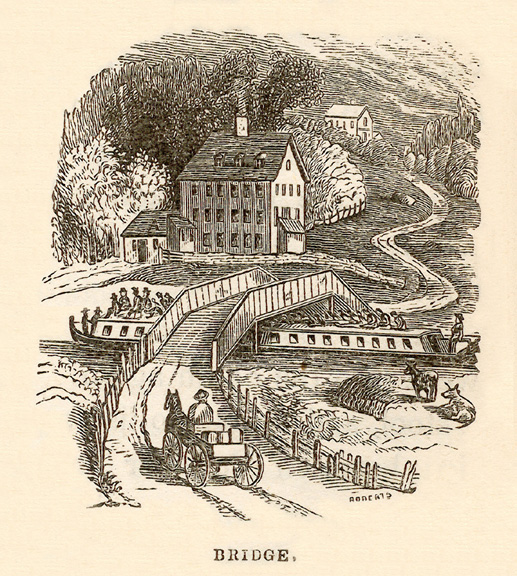
For packet boat canallers the safety of their passengers was important. Numerous bridges spanned the canal, often crossing farmland bisected by the Erie. The many travelers who took some fresh air on the roof of the packet boat cabin were in danger of suffering serious, even mortal, injury if they did not heed the canaller’s warning of "Bridge!" or "Low Bridge!" Neisuler mentions an 1835 Amsterdam newspaper report of a rather gruesome accident. A young woman traveling between that city and Schenectady was reading in an inclined position to avoid head exposure, when the vessel passed beneath an especially low bridge: “…before she had an opportunity of discovering her danger, her head was caught and crushed in a horrid manner, between the timbers of the bridge and the trunk on which she was leaning….” (157).

Accidents were common among canallers as well. Schenectady chronicler Larry Hart notes that mishaps were a daily occurrence in Old Dorp; along with injuries from low bridges, they included drownings, heat prostration, mangled limbs, and strangulation by ropes. Wyld offers several examples of these unfortunate events, including an incident in which the rope line of a grain boat near Two-Mile House in Rotterdam wrapped around a boater’s leg, dragging the vessel and nearly severing the man’s appendage. As the author relates, the victim was brought to the nearby hotel, “… and given a good supply of spirits until the doctor came to complete the amputation” (Boaters 110). Another accident on the enlarged and deepened canal was the result of a leaky boat—not an uncommon occurrence—which carried a cargo of rock salt. As the craft began to sink between Schenectady and Niskayuna, the captain used an axe to cut open the stable roof to save the mules.
           

Some locktenders on shore spied the woman and shouted to the captain.“Never mind those mules,” they hollered, “get that old lady off the boat before it goes down!” The boater kept hacking away. “These mules cost money,” he shouted back. “I can get an old lady anyplace!” (110)


As some of the stories related above indicate, canal life generated a rich body of traditional tales. Among many others were yarns about an incredible strong Bunyanesque character named McCarthy, the giant squash of Palmyra, the Rome area’s giant frog, and mosquitoes from the swamps west of Utica. Another Schenectady tale involves the winds that often blew women’s skirts up as they crossed the numerous bridges spanning the canal. From this embarrassing situation arose a story from the end of the nineteenth century, about a lovely woman attired in quality clothing and a “…wide-brimmed blue velvet hat, topped by a black ostrich feather.” When a stiff wind blew her hat into the canal, she ran away in a confused state. “The boaters and dock workers who watched her broke into loud guffaws, for along with that beautiful hat, proud ostrich feather and all, the pesky canal wind had lifted her auburn hair clear off her head, revealing a now wigless, grey-haired older woman” (Wyld, Boaters 44).

Those who made their living on the canal were a colorful group of characters, who worked and played hard, and made the Erie Canal era the fascinating period that it was and an integral part of the life of Schenectady and an expanding American nation.

Works Cited: 

Neisuler, Jeanette. "When Schenectady and the Erie Canal Were Young." New York History, vol. 35,   no. 2, Apr. 1954, pp. 139-58.

"Schenectady Was One Bright Spot on Erie Canal." Schenectady Gazette, 4 May 1922, p. 14.

Wyld, Lionel D. Boaters and Broomsticks: Tales and Historical Lore of the Erie Canal. Utica, North   Country Books, 1986.

Wyld, Lionel D. Low Bridge! Folklore and the Erie Canal. Syracuse, Syracuse University Press, 1962.