Saturday, July 30, 2022

History of Collins Park

 This blog post was written by library volunteer Diane Leone.

Any resident of Scotia or the surrounding area is familiar with Collins Park, a recreational gem visible to anyone approaching the village of Scotia from the Western Gateway Bridge. Having served the community for approximately one hundred years, the park’s origins are inextricably linked to the founding of Scotia itself. 

One of the founding fathers of the village of Scotia was Alexander Lindsay Glen (called by the Dutch Sander Leendertse Glen), from the Scottish noble house of Lindsay. According to his descendants, in 1655 he purchased 100 acres of land from the Mohawks, members of the Iroquois confederacy. Lindsay was also one of the original fifteen men who held land from the Schenectady patent of 1664. The house he built, which he called Nova Scotia in honor of his homeland, was unfortunately too close to the river’s edge, with erosion weakening the foundation.  As a result his son, Johannes, built what is now called the Glen Sanders Mansion in 1713. Upon his death, his son Jacob inherited the home with the proviso that he construct a house for his brother Abraham. That structure, the Abraham Glen House, currently houses the Scotia branch of the Schenectady Public Library. 
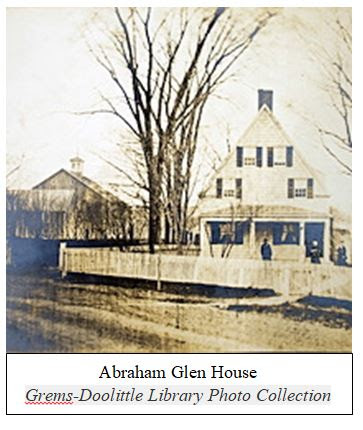
In 1842 Theodore Sanders, a descendant of Jacob’s daughter Deborah and husband John Sanders (who consolidated all of the family’s holdings in the Sanders name), sold the Abraham Glen property, including the home and 78 acres, for $11,925 to two brothers from Ireland, James and Charles Collins. The land included what was first called Glen Lake, then Sanders Lake, and later named Collins Lake, where the brothers ran an ice business, cutting ice from the lake and distributing it in a wagon advertising “Collins Ice.” 

In 1895 the brothers created a private park that sported trees for shade, as well as seating, a baseball diamond with bleachers, tennis courts, and a pavilion for dancing. The park offered recreational activities in summer, as well as winter. The J. C. baseball team, named for James Collins, played at the park. 


Visitors also enjoyed the lake, where they could rent flat-bottomed boats from the lake house for 10 cents an hour, and also pick pond lilies for 2 cents per lily.  The winter offered tobogganing, a wildly popular sport in the latter part of the 1800s. The photo below, from the 1870s, shows the toboggan slide, which ran north from Dyke Road, now Schonowee Avenue. 

The background to the creation of Collins Park is not entirely clear. The private park closed in 1905 after James Collins’s death. In 1922, with the death of his daughter Anne, the Abraham Glen home was bequeathed to the Daughters of Wisdom nuns, who ran a children’s home. Since the house did not meet their needs, Anne Collins’s executors offered the land to the village, which acquired the Abraham Glen house—it became the Scotia Free Library in 1929— and the attached land, including the western rim of the lake, for $30,000, with the proviso that the land be designated a public park named after the Collins family. Fund-raising activities helped defray the cost, $5,000 of which was donated by General Electric. In 1924, Collins Memorial Park consisted of 26 acres maintained by the Collins Park board. That board handed the park over to the village in April of 1928, with Scotia now responsible for completing the payment for the property. The deed was executed that July. 

The rest of what came to be Collins Park was acquired separately. A man named Neil Ryan owned property to the east of the park, including the remainder to the lake. His proposal to sell the land to the village for $65,000 came before the village board in November of 1928. Unfortunately, no further documentation is available on the actual vote, or how that section of land was incorporated into the park. Interestingly, the deed for that section of the park is dated 1937, with a different seller. 

Thus was born Collins Memorial Park. It provided a variety of activities, including tennis, baseball, horseshoes, swings, toboggan slides, and skating equipment for children, as well as individuals to oversee the playground. 

In Scotia 100 Years...Memories of a Village, lifetime resident Marion Gilgore recalls the warning system for ice-skaters on Collins Lake. 

“There was a building right behind the library with a flagpole. If the flag was blue—the ice was safe and if the flag was red—the ice was too thin to skate on. Of course there was always someone who would try to skate when the flag was red and fall through the ice. Then they would call the fire department."

After World War II, the state undertook a project to deepen the Erie Canal network and needed a site to deposit the excess dredging material. Scotia mayor, Bill Turnbull, made an arrangement with the State Waterways Maintenance Department to have this material fill in the lower part of Collins Park, thus expanding it. In 1946 more than 1 million cubic yards of fill was added to a marsh area currently inside the park and on the side of Schonowee Avenue abutting the Mohawk River. The community—both individuals and groups—assisted with donations of trees, as well as the creation of a Little League park and beach area and the construction of additional tennis courts. 

Around the same time, the now famous Jumpin’ Jacks had its start. Jack Brennan purchased land along Schonowee Avenue from the Sanders family to build what was initially called Twin Freeze, and then Jumpin’ Jacks, where he would sell soft ice-cream, a newly popular treat. 
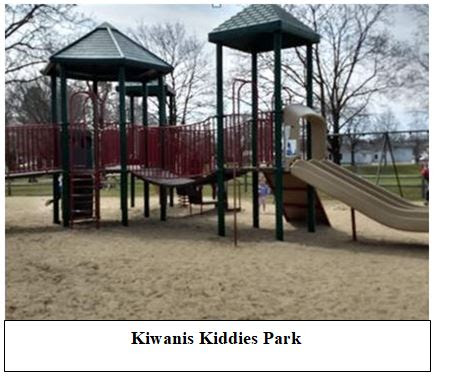
Over the years, facilities have been added or improved, thanks to service organizations such as the Kiwanis Club (which funded the Kiddies Park) and the Rotary Club. In the 1960s, the swimming area and beach were moved to the current area. The park was a popular venue for baseball, basketball and even Scotia-Glenville High School football games. As Alan Hart so fondly reminisces about the Tartans in Dear Old Scotia: 

Before the new field behind the school was laid out, however, I remember going to home football games on the old field at Collins Park in the 1950s. It was a blast! The field was laid out east to west in the bowl behind the library, and if you were a kid like I was, it was pretty easy to sneak in and watch the game without paying. The entrance was sectioned off with ropes, but if you waited for an opportune moment once the game had begun, you could duck under the ropes when the man tending the entrance was watching the action on the field. Then you could use that money your mother gave you for your ticket on an extra hotdog or two! (2) 

A wonderful recreational area on the river side of Schonowee Avenue next to Jumpin’ Jacks is Freedom Park, which was created in 1976 as part of the state’s Bicentennial celebration. It has picnic tables, an amphitheater/stage area where free summer concerts draw large crowds, and a small dock called Scotia Landing. Quinlan Park is a popular fishing area located on Washington Avenue on the eastern edge of Collins Lake. 

The lake is a 55 acre oval-shaped body of water located in the park’s center. Residents use it for fishing, ice-fishing and boating. Unfortunately, the lake is filled with invasive aquatic species, such as water chestnuts, milfoil and pondweed. To remedy this situation, dredging was performed in 1977-78 and again between 1988 and 1992, when the unearthing of Native American artifacts forced the town to stop. To make matters worse, the 2011 tropical storms Irene and Lee deposited river sediment into the lake, closing this popular spot for swimming. In June of 2021, the town of Glenville put into effect a plan to eliminate milfoil. It is hoped a water herbicide treatment in the spring of 2022 and 2023 will help rid the lake of water chestnuts. 

Some interesting stories are associated with Collins Lake. On November 20, 1857 a local newspaper reported the strange tale of a sea serpent spotted by broom corn workers as well as two other men. This frightening beast was described as “a most hideous monster; it was variously reported to be from seven yards to a half mile long and was said, when in an angry mood, to lash the waves with a gigantic tail until the lake was one sheet of foam.” Its actual appearance, when caught, did not quite live up to expectations. It was said to be on display at Schenectady’s Anthony Hall. The creature apparently put in another appearance on March 28, 1934, as reported by Scotia resident Dr.Wilber D. Rose in a rather sardonic tale printed in Scotia, 100 years 1904-2004: Memories of a Village. The “monster” was said to be displayed in the State Education Building. The reader will have to decide on the veracity of these stories. 

Another incident in the lake’s history occurred in 1948, when four boys borrowed a rowboat without permission and proceeded to the island in Collins Lake. The quite irritated owner swam to the island to recover his craft, leaving the culprits stranded. In the afternoon, the father of one of the boys saw the quartet on the island, gesturing and shouting. Recognizing his son, he went to the police station, where the boat owner was persuaded, rather reluctantly, to rescue the group.

Today, Collins Park continues to draw the community throughout the year. In winter, families enjoy sledding down the hill behind the library (the former Abraham Glen House), and hardy souls can be seen ice fishing on the frozen lake. During the warmer months the park comes alive with a variety of activities. The tennis courts are popular, and there is always at least one baseball game going on, with friends and families rooting for their teams and players. Walkers and joggers fill the park paths, and picnickers at Freedom Park enjoy the waterfront view. People flow between the park and Jumpin’ Jacks, where they can grab a quick bite or maybe a refreshing ice cream. On certain summer evenings, people bring lawn chairs to enjoy the musical entertainment in Freedom Park’s amphitheater. In July and August the US Water Ski team holds daily practices and weekly performances along the Mohawk shore, where large, enthusiastic onlookers crowd the shoreline behind the restaurant and in Freedom Park. 

The Collins family left the village of Scotia a wonderful legacy.


Special thanks to Village of Scotia historian Beverly Clark for her help in locating and gathering information for this blog.


Bibliography:

Armstrong, Shirley. "Boys 'Marooned' 4 Hours on Collins Lake Island." Schenectady Gazette,  June 26, 1948, 6.  

Briere, Shenandoah. "Village of Scotia Weeding out Collins Lake." Daily Gazette (Schenectady,  NY), August 8, 2021, 15.

Campbell, Ned. "Familiar Summer Story: Collins Lake Beach Closed." Daily Gazette (Schenectady, NY), June 5, 2014, A1.

Hart, Alan. Dear Old Scotia. Scotia, NY: Old Dorp Books, 2004.

Hart, Larry. "'Deal Struck 51 Years Ago Influenced Park's Growth." The Gazette (Schenectady,  NY), September 7, 1997, B07.

Schenectady County Historical Society. Glenville. Charleston, SC: Arcadia, 2005. Scotia, 100 years 1904-2004 : Memories of a Village. N.p., 2004.

"Settlers at Schenectady, 1661-4." In History of the Mohawk Valley: Gateway to the West 1614- 1925, edited by Nelson Greene. Chicago: S. J. Clarke, 1925. 

Sloan, Frances Anderson. "History Walks with Scotians" columns in the Scotia-Glenville Journal.

Weatherwax, Bonnie, Heritage Coordinator. Scotia-Glenville American Revolution Bicentennial  Book of Remembrances, June 18-26. 1976. N.p., 1976. 

Collins Park clippings files at the Schenectady County Historical Society 


Wednesday, July 13, 2022

William Van Bergen Van Dyck

William Van Bergen Van Dyck, age 100. Photo from the Van Dyck Personal Papers, Grems Doolittle Library.


This post was written by library volunteer Gail Denisoff.

Growing up in New Jersey, Billy attended a private school affiliated with Rutgers College. His father, Francis, was an analytical chemistry and physics professor at Rutgers, and was frequently asked to consult on projects by his friend and neighbor, Thomas Edison. As a boy, Billy often accompanied his father to Edison’s laboratory and later remembered being present at an early demonstration of the phonograph. An autographed photo that Edison presented to Billy as a birthday gift was one of his lifelong prized possessions.

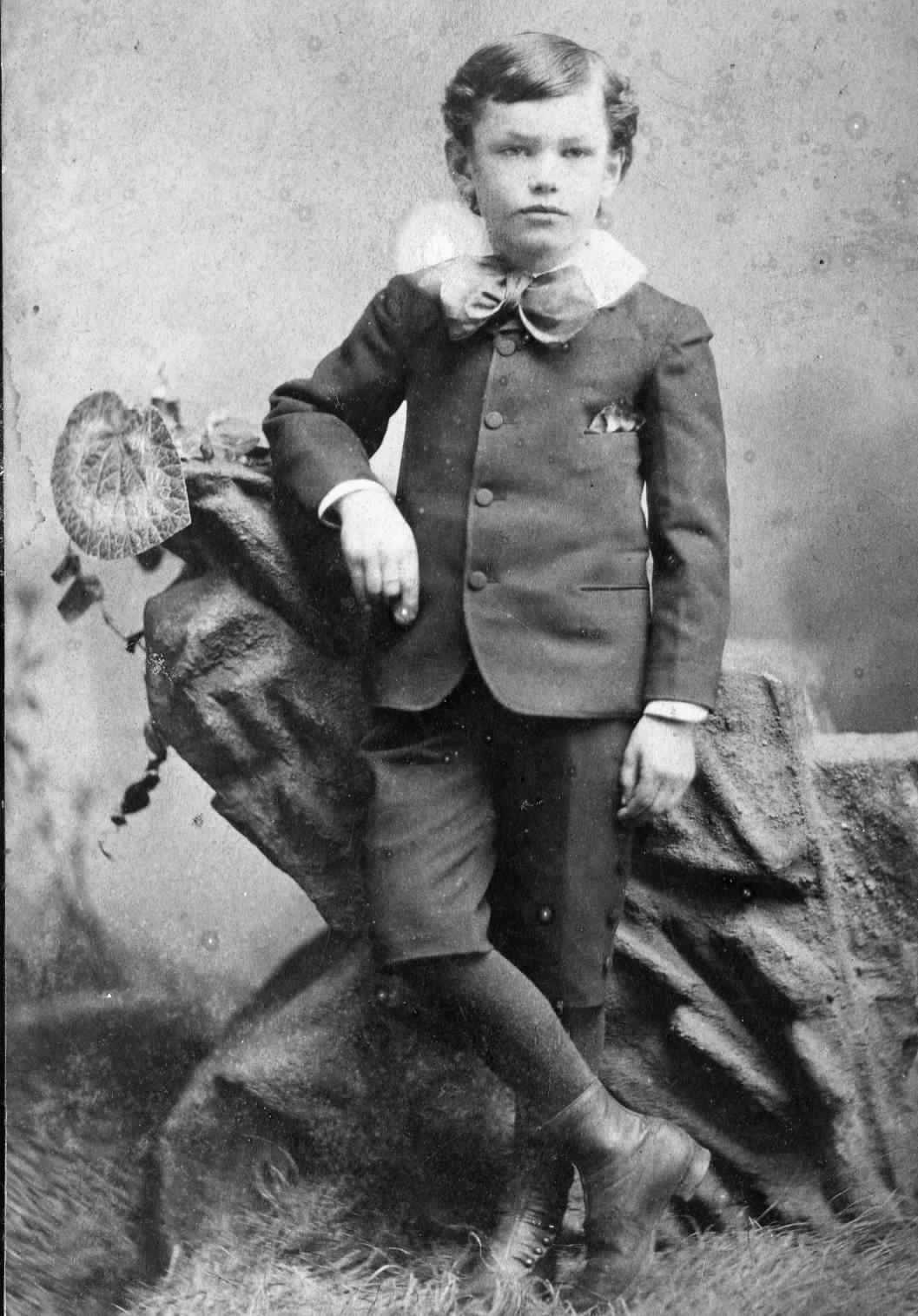
Billy circa 1880. Photo from the Van Dyck Personal Papers, Grems Doolittle Library.
 

After high school, Billy went on to Rutgers, graduating in 1896 with BS in prismatic glass and light reflection. In 1897 he graduated from Columbia with a degree in electrical engineering and then received an MS from Rutgers in 1898. While in college, he was captain of the varsity football team, played second base on the varsity baseball team, was a standout in the 100 yard dash, sang with the glee club, and was a member of Delta Phi, Phi Beta Kappa and Tau Beta Pi.

His first job out of college was with the American Luxfer Prism Company in Chicago where he was in charge of the research laboratory for a year. He then became a sales engineer for the company in Pittsburgh and New York. By 1899 he was back at Rutgers teaching math and electrical engineering. Two years later, he married Frances “Fanny” Johnson, a stage actress, and decided that two couldn’t live on what he made as an instructor so took an engineering and manufacturing position in North Carolina. 

In 1906, his international career began with a new position as an engineer in Santiago, Chile with the W. R. Grace Company, agents of General Electric. His next move was to Brazil in 1911 as a representative of General Electric of New York. He stayed in that position until 1914 when he was appointed Managing Director of Cia General Electric do Brazil. In 1918, he was named President of General Electric South America, a Brazilian corporation. 

Portrait of Billy taken while he was employed by GE in Brazil. Photo from the Van Dyck Personal Papers, Grems Doolittle Library.
  

During the time he lived and worked in South America, he took on several interesting projects. One of the first was in 1908 when he was still living in Chile. He purchased four electric automobiles, intending to sell them for a profit. He kept one for his own use and sold one to the Ambassador of England, but quickly found that there was no market for the other two. Realizing the cars would depreciate the longer he held on to them, he decided to trade them for a warehouse full of wine. He reasoned the wine might increase in value – and if he couldn’t sell it, he could always drink it.

Billy was proud of his attempt to light the Straits of Magellan. Located in Chile, near the tip of South America, it was a treacherous but essential waterway before the Panama Canal was built. One stretch close to the Pacific was particularly dangerous with high cliffs, a 40 knot current and 40 foot tides. His workers installed a light on a long flexible chain anchored to the bottom. Although successful for a time, the current and tides tangled the chain and the light eventually sank to the bottom. That was the first and only attempt to light the Straights.

Another interesting project was to provide light for the 1923 Brazilian Exposition. Billy was instrumental in achieving locally produced light bulbs. Prior to 1923, parts were made elsewhere and assembled in Brazil. Under his leadership, glass bulbs began to be manufactured in Brazil and other components soon followed. Because of this, he was able to obtain the contract for the design and installation of lighting for the exposition using crystal prisms and electric lights that reflected the light in a spectacular manner. The setup was a huge success.

Billy liked to tell the story of a Brazilian cowboy who rode a horse to his office and dropped $60,000 in cash on his desk for an electrical installation at his remote ranch. When Billy questioned whether he felt uneasy leaving that amount of cash with him the cowboy replied, “Not at all, Señor, after all, I can trust the General Electric Company!”      

While in Brazil, Billy was a founder and director of the American Chamber of Commerce of Brazil, President of the Rio de Janeiro chapter of the American Red Cross, a founder of the Rio de Janeiro Country Club, was the catcher for the American Rio baseball team well into his 40’s, and a director and president of the American Society of Rio de Janeiro. Sadly, Billy’s wife Frances died in 1922. She lived with Billy in Brazil but returned to the United States before her death. Billy also returned to the U.S. on several occasions. One was to attend the 75th birthday party of his old friend and neighbor, Thomas Edison. 

Billy traveled on the SS Western World in 1923 from New York to Buenos Aires. Image from

Pacific Marine Review, v. 19, August 1922, p. 469, archive.org.

Billy was on board the steamship SS Western World out of New York bound for Buenos Aires in May of 1923 when a telegraphed chess challenge was received from the SS American Legion that had just left Argentina. Three players from each ship participated in what would be the first chess game by wireless. Billy was captain of his team and fifteen moves were made the first night until communications were lost. The match continued the following night as reception was almost non-existent during the day. After four nights and thirty-five moves, each team declared victory when radio reception did not allow them to continue. Not minding that no winner was determined, Billy considered the match great fun and a unique experience.  

 Billy held the position of President of General Electric South America until 1926 when he returned to the United States and in June 1927 became the Manager of the Schenectady office of the International General Electric Company, a title he held until March of 1937 when he became Assistant to the President of IGE. On Valentine’s Day of 1931 Billy married his second wife, Schenectady native Elvira Haight, who had a daughter from a previous marriage.

One of the highlights of his tenure in Schenectady was bringing the King of Siam to meet with General Electric scientists as a guest of IGE. King Prajadhipok, who at that time was one of only two absolute monarchs in the world, was traveling incognito using the alias Prince Sukhodaya. On July 9, 1931, Billy traveled to New York City and joined the King’s party on a private railroad car. When they arrived in Rensselaer the car was disconnected from the train and a special locomotive was attached which brought the group directly to the General Electric plant. A telegraph sent to Billy the next day from the King’s secretary thanked him for the enjoyable day and asked if he could locate and return a vest the King left on the train.

International General Electric hosted many other guests from around the world including the Counsel General of Ecuador and Count Folke Bernadotte, the nephew of King Gustuv of Sweden. The Count sent Billy a letter thanking him for the day he spent in Schenectady meeting with a group of scientist that included Dr. Ernst F. Alexanderson. 

Billy traveled to South America on several occasions while he worked for IGE. On June 10, 1939 he was awarded the “National Order of the Southern Cross,” the highest decoration given by the Brazilian government to a private foreign citizen. The citation noted the award was given for his “distinguished service in the promotion of international good will between the United States and Brazil.”

Billy was very active in community affairs in Schenectady. He was a member of the Schenectady Chamber of Commerce, Rotary Club, YMCA of Schenectady, Chairman of the Schenectady Community and War Chest during World War II, and President of the Capital District branch of the Holland Club of America. He was also active in the Mohawk Club and the Mohawk Golf Club.

When Billy retired at age of 70 on December 31, 1945, after 34 years with GE, he didn’t slow down. He and Elvira traveled the world collecting art objects that they displayed in their home at 21 Washington Avenue. He was a founding member and Trustee of the Community State Bank for over 35 years, and was never late or missed a meeting, even when he was over 100 years old. At 104 he attended his 85th Rutgers reunion where he was honored as the oldest alumni and last living member of the class of 1895.

Billy at his 85th Rutgers reunion, the last surviving member of his class. Photo from the Van Dyck Personal Papers, Grems Doolittle Library.

Billy never had children but after his wife, Elvira, died in 1974 his niece, Florence Bucher came to live with him as his companion. He walked his dogs, first Firecracker and later Cracker Jack, around the Stockade neighborhood daily, often stopping by Arthur’s Market. He went to the Mohawk Club every day to visit with friends and play backgammon, chess, and cards. At 103, Billy’s started receiving nursing care in his home, but his mind stayed sharp. He said he had a cousin who lived to be 108 and wanted to beat that family record. Unfortunately, Billy passed away on March 18, 1981, at the age of 105, three years short of his goal. After local services at St. George’s Church, he was buried with his Dutch ancestors at Riverside Cemetery in Coxsackie.

During his long life, Billy lived through the administrations of 24 presidents from Ulysses S. Grant to Ronald Reagan. On his 100th birthday, Mayor Frank Duci awarded him the distinction of Patroon, Schenectady’s highest honor. A modest man, he said, at the age of 104, that he never did anything special -- “The only thing I ever did was get old!”


References:

Bishop, John Keith, “Stockade Spy Honors a Favorite Citizen”, The Stockade Spy, May 1974.

“GE’s Third Oldest Pensioner Holds His Own at Milestone Age of 100”, Schenectady GE News, March 12, 1976.

Hart, Larry, “Chess Foes Vie Across Ocean”, Daily Gazette, 1973.

Hayden, Barbara, “100 years young”, Knickerbocker News, Sept. 8, 1975.

Ryan, Buttons, “Former Coxsackian, at 102, Remembers Village History”, Greene County News, January 26, 1978.

Shapiro, Ricki, “104 Year Old Tells Tale of Travel, Achievement”, Daily Gazette, 1980.

“van Dyck: a little Dutch college”, Rutgers Alumni Association News, Winter 1979.

“W.V.B. Van Dyck: GE Brazil’s ‘Grand Old Man’”, General Electric News Worldwide, September 1974.

Van Dyck Personal Papers, Grems-Doolittle Library (2006.009)

Friday, May 6, 2022

The Belanger School of Nursing

This post was written by library volunteer Gail Denisoff.

As Nurses Week approaches, we have the opportunity to acknowledge the nurses in our lives and thank those who work tirelessly each day. If we didn't already know how hard nurses work, these past two years have made it crystal clear. Our nurses have put their own well-being at risk as they took their place on the front line of the Covid19 pandemic - caring for the sick, acting as a lifeline between patients and their families, and all too often, offering the hand a patient holds as they take their last breath.

Schenectady has a long history of dedicated nurses working in the many hospital and medical facilities in the city. Many of these nurses were trained right here in the city at the Belanger School of Nursing, formally the Ellis Hospital School of Nursing.

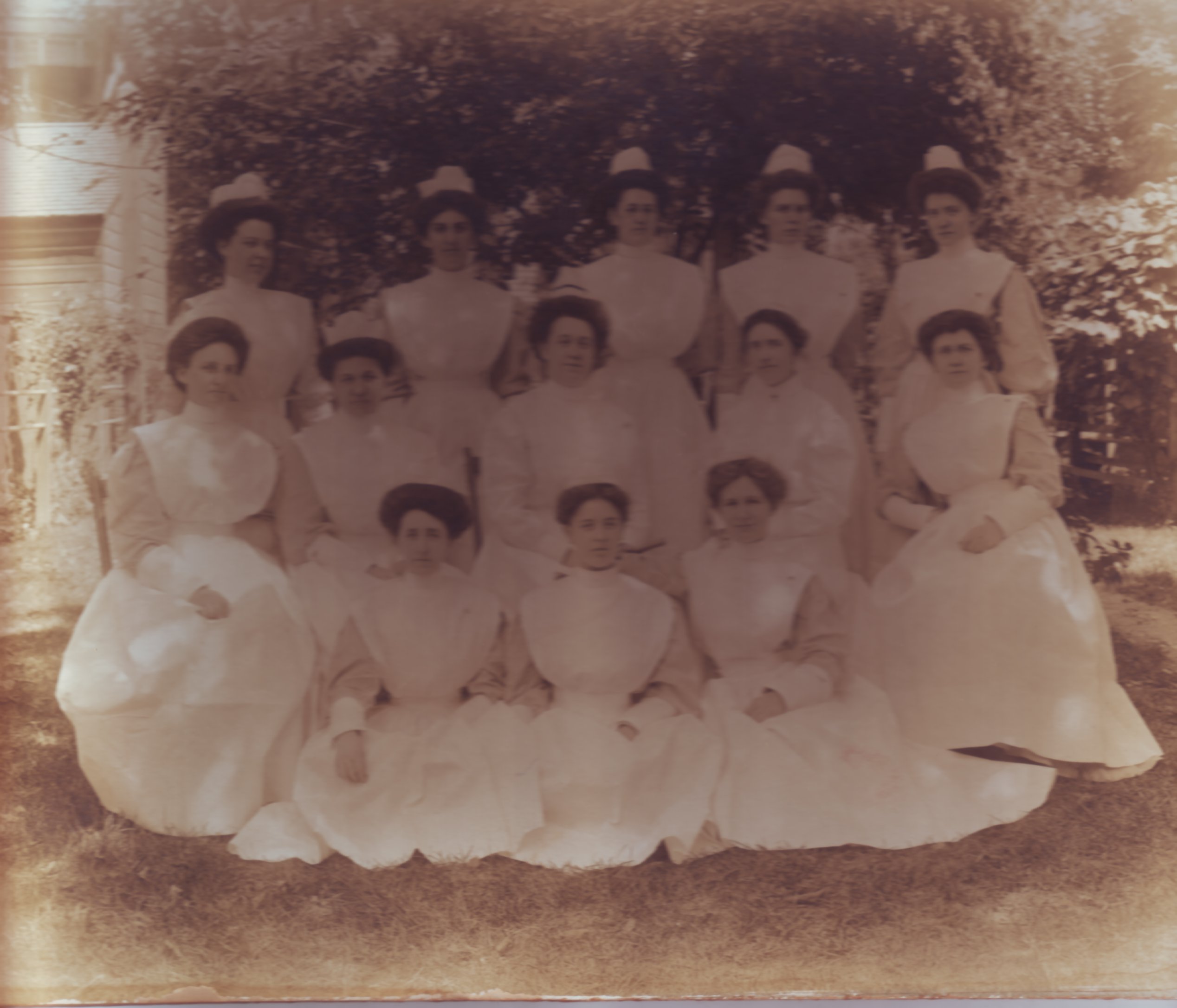
Nurses at Jay Street Hospital, circa 1898. Grems-Doolittle Library Photograph Collection.
 

In 1903, Ella Underhill, a supervising nurse at the Jay Street Hospital, began teaching five young women the basics of nursing. The new Ellis Hospital building on Rosa Road was completed by 1906, and included the Whitmore Home for Nurses. Gifted by J.W. Smitley, president of the Hospital Association, the Whitmore Home was a separate building in a similar style to the hospital. It housed nursing students along with some staff nurses. The school was incorporated in 1906 as the Schenectady Hospital Association’s Training School for Nurses and graduated its first two students, Lenita Mallery and Edith Jeannin Stanton.

The Schenectady Hospital Association’s Training School for Nurses was one of the first nursing schools in the state to receive a permanent charter in 1917. At first, the three-year program consisted mainly of learning on the job and providing needed nursing care to patients. The head nurses in various departments provided instruction to students.  Eventually a curriculum evolved and classes were held one day a week. By the early 1920s, a nurse was hired to serve as the dedicated faculty of the school teaching all the pre-clinical courses, planning student assignments, and supervising student work in the hospital.  By the 1930s, the curriculum had become a defined course of study and more faculty were hired, shifting the focus of the school from student service in the hospital to student education.  Classes increased in size and Whitmore Home became solely a dormitory for students with classrooms in the basement. Later, an annex was added to the rear of the building, increasing the number of offices, classrooms, and dormitory space. 

Student nurses in class, circa 1920. Grems-Doolittle Library Photo Collection.
  

In the 1950s, students took courses at Union College for anatomy, chemistry, and psychology. In 1958, the nursing school's charter was relinquished when the governance was transferred to the Ellis Hospital Board of Trustees. At that time the name was officially changed to The Ellis Hospital School of Nursing, although it had been called that colloquially for years.

In 1974, the Whitmore Home was torn down and students moved to rooms on the fourth floor of the YMCA on State Street along with their residence director Mrs. Mildred Hotaling. Classes were taught at Sunnyview Hospital. By 1976, students were no longer housed at the Y and began commuting from home or living together in apartments. Classes were now held in the basement of Oneida Middle School. By 1992, the school moved to the former Big N Plaza on the corner of Nott Street and Maxon Road, followed by a move to the Belanger Campus on Erie Boulevard in 2004.

The closure of the student nurses' residence put an end to some fun times that students enjoyed.  Nancy Wasmund of the class of 1969 remembers living at Whitmore Home with Nellie Leba as house mother. Students fraternized with Union College students who were just down the street, and some met future husbands. The annual Junior-Senior Variety show directed and choreographed by Dr. Clowe and Dr. Sullivan was a highlight of the year and an enjoyable experience for all involved. At that time there were no male or married students allowed. All classes were held at Ellis except for a psychiatric rotation at Marcy State Hospital where they worked with students from other nursing schools.     

Ann Marie Czaikowski, class of 1974, was a member of the last class to live in Whitmore Home for her first and second year before it closed. She remembers living with two to four girls in a room and developing a close camaraderie with her classmates because of living and learning together.  

Postcard featuring the Whitmore Home. Image from the Laura Brown Slide Collection, Grems-Doolittle Library.

Dr. Lisa Bagdan, RN PhD, class of 1986 and currently an instructor at the Belanger School of Nursing, took her classes at Oneida Middle School. She remembers having an “amazing clinical experience. It’s something the nursing school excelled in and still does.”


In 1986, the curriculum was shortened from the 3-year program to 21 months. A partnership with Schenectady County Community College enabled students to graduate with an Associate in Science degree in Nursing beginning in 1994.

In 2013 the school moved to its permanent location on McClellan Street on the former St. Clare’s campus and the name was changed to The Belanger School of Nursing thanks to a generous bequest to the school by the Belanger Family.

Over the years, the demographic of the school has changed: students are older, male students are common, many students are married with children, and students come from many different cultures and countries. One thing has stayed the same, however; the reputation of the Belanger School of Nursing remains strong. The school has a long history of excellence and its graduates have scored consistently high on statewide board licensing exams.

In 2019, the New York State Education Department approved a dual degree program in collaboration with Siena College. The first class began in the fall of 2017 and graduated with a BS in Nursing in 2021. Currently half of the nursing school enrollment are part of the Siena collaboration and the other half are in the traditional Associates of Science in Nursing program. 

Dr. Michele Hewitt, BS DNP, current Director of the nursing school, sees a bright future ahead. “Our future will always be to serve our community and to serve Ellis Medicine. Our goal is to increase enrollment and for the student body to reflect the diversity of the community in gender, race, socio-economic status, marital status, first generation students, and age.” The success of the nursing school is evident. Every year 100% of Belanger graduates are offered jobs. Dr. Hewitt adds, “Ellis Hospital offers all our graduates a job and aspires to hire at least 75% of the Belanger graduates. We hope they’ll stay.”

Front page of the Elliscope newsletter, highlighting the nursing graduates of 1969. Courtesy of Nancy Wasmund.

References:

Hart, Larry, The Hospital on the Hill, Chapter 25, The Nursing School, pp.158-164.

History of The Belanger School of Nursing, School of Nursing, Ellis Medicine website.

Nelson, Paul, “Belanger School of Nursing Opens”, Times Union, Aug. 20, 2013.

Wilkins, Jeff, “Years of Caring: Ellis School of Nursing to mark century of growth and progress”, Daily Gazette, May 3, 2003.

Saturday, February 12, 2022

Memories of Black Schenectady - African American Historical Records Project Kick-off Event

The Schenectady African American Historical Records Project is proud to host "Memories of Black Schenectady," a celebration for Black History Month and the kick-off event for the survey phase of our project. 


This virtual event will be held on Thursday, 2/24/2022, at 7pm at facebook.com/schenectadyhistorical. You do not need a Facebook account to watch live.


Join us for a conversation with Miki Conn, Walter Simpkins, and Adonis Richards about their lives and memories as Black Schenectadians. This event is part of the Schenectady African American Historical Records Project, a public history project focused on preserving the heritage and historical records of African Americans in Schenectady. We’re launching a community survey which will ask a range of questions that we hope will help expand the community’s knowledge of the history of Black people in Schenectady and illuminate the historical records preserved within the community. We invite you to attend our virtual conversation and learn more about the project, survey, and community memories. Your participation will be an important part of developing the history, legacy and memory of the Black community in Schenectady.


For questions and more information, contact Marietta Carr, librarian/archivist at Schenectady County Historical Society, at librarian@schenectadyhistorical.org or 518-374-0263 x3.


Learn more about the African American Historical Records Project: http://gremsdoolittlelibrary.blogspot.com/2021/02/african-american-historical-records.html. 

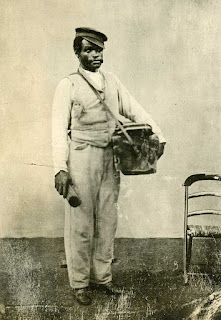
Bartlett Jackson. Grems-Doolittle Library Photo Collection

Tuesday, February 1, 2022

Organizing Family Papers and Photos

For many people, January and February are the months they spend the most time at home. The cold and snowy weather discourages them from venturing outside, or they feel like they need time to decompress from the excitement and stress of the winter holidays. With the recent increase in COVID cases, many people find comfort and safety in just staying home. If you're spending more time at home these days, this might be a good time to focus on organizing your family papers and photos. Like genealogy research, organizing your family papers will help you connect to your personal and local history, build relationships with your relatives and friends, and strengthen your memories. Here are some tips and resources to help you organize your family's papers and photo collections:

 Basic rules for organizing family archives:

  • Do what you can at your own pace. It's better to go slowly and give yourself time, especially if you're working with materials that bring up a lot of emotions or memories.
  • Don't be overwhelmed by the idea of doing it 'exactly right.'
  • Practice safe handling and incorporate good preservation practices into your process.
  • Label as much as you can, especially on the outside of enclosures (e.g. folders and boxes). Try to answer the five W questions (who, what, where, when, and why). Putting this information on a label will make it easier to organize your collection and reduce the amount of handling you'll need to do in the future.

Practice good personal records management for the paper you are creating or collecting today:

The day-to-day business of living generates a lot of paper: receipts, pamphlets, bills, napkins, free mailing labels, shopping lists, and scraps of reminders (just to name a few). Some of these things need to be saved for a specific period of time (e.g. tax returns) and some of these things should be saved indefinitely (e.g. wills and birth certificates). Most of the paper you create and collect should be discarded, but when you're busy and focused on living your life, it's easy to let it all accumulate and mix together. One of the best things you can do for yourself and the future generations who might inherit your papers is to set aside some time regularly (e.g. every month) to sort your papers, discard what is ready to be discarded, and file what needs to be saved. Labeling and filing what you need or want to keep will make it easier to figure out what should be kept indefinitely or passed on to future generations.

Figure out what's important to keep:

There's lots of information online about what people should keep and for how long, but a lot of this advice focuses on the practical or current use of personal papers. Tax returns, for example, should be saved for several years in case you are audited or you need to amend a past return. Receipts should be saved so you can reconcile your financial statements, return items, or make claims against a warranty. However, when thinking about your papers from a historical perspective, the value or reason for keeping something may change and no longer fit the original or practical purpose. Not everything is meant to be kept indefinitely, and the reasons for keeping something may be unique to you and your family!

What to save indefinitely as part of your family archives varies from person to person and family to family, but there are a few ways to help you determine what's best for your collection. First, ask yourself:

  • How much space do I have to store the collection properly? 
  • How much money do I have to invest in archival storage boxes or folders? 
  • How much time do I have to spend organizing and labeling the collection? 
  • How much energy do I have to spend organizing and labeling the collection?
  • Who is going to help organize or take care of this collection? 
  • What will happen to the collection when I can no longer care for it?
  • What resources do I have to save the content of something if the condition is deteriorating quickly? For example, newspapers deteriorate quickly and can harm the papers stored with them. Photocopying or scanning can help you save the information in a newspaper article or obituary and allow you to discard the damaged original.

The answers to these questions will help you determine how large your collection can be and which materials you should prioritize. It's alright if you can't keep something! 

There are some types of papers that are almost universally considered important enough to keep indefinitely, even if their practical purpose no longer exists:

  • Vital records: birth, adoption, death, marriage, and divorce certificates/records
  • Photos and home videos or recordings
  • Heirlooms and the documents that explain where they came from and how you inherited them
  • Land and building records: deeds, architectural drawings
  • Letters and diaries
  • Military records: enlistment cards, discharge papers, service awards

For other types of papers, consider these questions when trying to figure out whether to keep them indefinitely:

  • What does this document tell me about the person who created it? Does it help to make the person more real or relatable?
  • What does this document tell me about the time period it was created in? Is it an example of how everyday people experienced a significant historical event?
  • Is the information in this document unique or can I find it in some other part of the collection?
  • How does this document relate to other materials in the collection? Does it provide information that will make other documents easier to understand?
  • Is this something I care strongly about or that other people care strongly about? Ask your relatives and friends!
  • Is the item in good condition? Does it require special handling or preservation? Can the information be saved in another format that's easier to care for?

Keep like with like:

  • Find natural groups -- by type (e.g. all of the photos together), by topic (e.g. all of the family vacation photos and documents), by creator (e.g. all the letters/diaries/documents created by your grandmother), by date (e.g. everything created in 1995 together).
  • Keep existing groups together when possible -- e.g. one of your ancestors may have already organized a portion of the collection (e.g. a scrapbook). Their work may help you with figuring out how to organize new additions or give you insight into what they knew about the family history and how they thought about what to keep.
  • There will be groups within groups -- e.g. the folders for family vacations may include a folder or two just for photos.
  • Organize with preservation in mind -- some materials are more sensitive, deteriorate more quickly, or require special handling. You may want to organize these into their own boxes or folders, even if they connect with another group, so that they can be handled more carefully.
  • Ultimately, there is no 'exactly right' way to organize your collection -- some materials will fit into multiple categories. Do what makes sense to you and fits within your capabilities.
  • Don't forget about your digital files! You can organize these using similar systems or criteria you use for analog materials.

Further reading:

Preservation Resources for Paper and Photo Collections

Resources for Preserving Digital Family Archives

How to Organize Your Family Keepsakes and Collections by Denise May Levenick

Organize Old Family Photos with the Parking Lot System by Denise May Levenick

When to Keep and When to Throw Away Important Documents by Elizabeth Larkin

How Long to Keep Tax Records and Other Documents by Consumer Reports